We can't wait to hear from you
Connect
Discover how TMI credentials are designed to accelerate your career growth. Explore how TMI incorporates Talent Management into the practice and systems of Human Capital Management. Learn how you can steer your future confidently through TMI's research driven Talent Management standards. Fellow programs equip global HR professionals with the latest in Talent Management in the transformational way.
Explore how the TMP™, STMP™, and GTML™ credentials can take your HR career places, or add to the capabilities of your promising HR staff and leaders.
View CertificationsStrengthen your enterprise HR system by implementing the TMI-ETMS™ international standards.
Learn About TMI-ETMS™If you are interested in consulting, training or education, partner with TMI to join the global league of TMI aligned institutions, companies and industries.
Become a TMI PartnerLearn the latest about how Talent Management is transforming HR into a future oriented business hyperfunction.
Explore the TMI ApproachLearn the steps to earn your TMI certification, from application to successful completion and maintaining your credential.
TMI credentials include globally recognized digital badges, offering a portable and verifiable representation of your achievements.

Kickstart your Talent Management journey with TMI’s globally recognized certifications and resources to excel in your career.
Create myTMI Account TodayTMI Global and Associate Fellow programs turn HR professionals into global Talent Leaders who can drive growth with their superlative strategic ability, business perspective and readiness for change. Since 2024, more than 150 senior HR professionals and HR leaders from 46 global organizations across industries have completed these programs that establish new standards for the practice of talent management as a driver of organizational success and business competitiveness.
You can contact us here for more information.

TMI–ETMS10™ and TMI–ETMS14™ certified organizations are effective for restructuring Talent Management in an organization. With TMI, organizations are better, more agile and better prepared for challenges that are to come.
The TMI-Enterprise Talent Management Standards power enterprise HR with the latest in Talent Management.
To choose a TMI–ETMS™ version most appropriate for your organization!
Write to us via the contact form.

Partnering with TMI means building a powerful structure of Talent Management thought and practice resulting in business profits through standards, certifications and networks.
Get your HR staffers and managers TMI certified on Talent Management by adding TMI into your training regimen. One step toward embedding TMI credentials in your institutions curricula is to become a TMI-ETMS™ consulting partner. Join us to be a part of the groundbreaking work of Talent Management.

If you hold an elite international qualification in HR or a related discipline, possess a recognized HR credential, or studied HRM at a TMI-recognized institution, you may be eligible for an accelerated pathway to a TMI credential through QualiFly™ leading to TMP™, STMP™ or GTML™.
 Institutions
Explore Certification Bodies, Universities, B-Schools & Other Institutions recognized by TMI under the Q1, Q2, and Q3 Lists.
Check if your institution is recognized
TMI’s blogs cover the latest trends, insights, and best practices in HR and talent management.
Comprehensive guides covering talent development, HR metrics, key facts, and more.
Explore TMI's latest updates, announcements, news and press releases in our newsroom.
Strategic insights driving the future of talent, leadership, and global workforce excellence.
Dive into the inspiring journeys of TMI certification holders and learn how the certification has transformed their careers.
An Interview series featuring key advice from global talent leaders for future HR professionals.
TMI’s editorial team is comprised of researchers, writers, editors, proofreaders, and contributors with extensive experience in the HR and Talent Management space. The team scrupulously researches, analyzes and deliberates on each submission before concluding its suitability for our publications.

The workplace has fundamentally changed. What began as a crisis-driven pivot has quietly become the new normal.
Today, the most successful organizations aren’t asking whether people should come into the office.
They’re asking when they do, why would anyone want to?
The answer lies in designing spaces that remote work can’t replicate, places that spark connection, creativity, and belonging in ways screens never will.
For HR professionals, this transformation presents both unprecedented opportunities and complex challenges. The question is no longer whether to adopt hybrid work, but how to implement it effectively while maintaining employee productivity and organizational success.
This article explores how HR leaders can navigate the hybrid work revolution, balance flexibility with performance, and build strategies that work.
The timeline of hybrid work's rise tells a compelling story:
By February 2023, 55% of remote-capable employees in the U.S. were working in a hybrid arrangement, a clear indication that this workplace transformation is here to stay.
The numbers tell a powerful story about hybrid work's permanence:
The shift to hybrid work is strategic, requiring a complete rethinking of organizational culture, policies, and the employee experience. Hybrid work offers compelling benefits when properly implemented:
While hybrid work offers tremendous advantages, HR leaders must navigate significant challenges to make it successful.
The Problem: When employees work in different locations, company culture can become diluted. Remote workers may feel disconnected from the organization's mission and values.
The HR Solution:
Innovation Example: Companies like Microsoft and Deloitte have introduced outcome-based performance models supported by robust digital infrastructure, ensuring culture remains strong across locations.
The Problem: Hybrid environments can create communication breakdowns where remote employees feel isolated or out of the loop. In-person collaboration often sparks creativity that's difficult to replicate virtually.
The HR Solution:
Best Practice: Atlassian adopted a "Remote First" policy making all meetings digital, ensuring nobody feels like a second-class participant.
The Problem: Traditional performance reviews based on physical observation and presence no longer apply. Some employees thrive remotely while others struggle with motivation or home distractions.
The HR Solution:
Critical Principle: Measure outcomes, not presence. Trust and accountability matter more than office visibility.
The Problem: Remote workers may feel overlooked for promotions or opportunities. In-office employees might receive more visibility and recognition, creating an unfair advantage.
The HR Solution:
Example: GitLab (100% remote) publishes every promotion rubric publicly and runs fully virtual calibration sessions.
The Problem: Remote workers often experience isolation and burnout. Without deliberate intervention, engagement can suffer.
The HR Solution:
Key Stat: 83% of employees value work-life balance over pay, making well-being initiatives critical for retention.
The Problem: Hybrid work depends heavily on technology. Without proper tools and infrastructure, businesses face technical difficulties, security risks, and accessibility issues.
The HR Solution:
Example: Dropbox consolidated everything into a single “Virtual First” toolkit and saw engagement scores jump.
Successful hybrid workforce management requires deliberate, strategic approaches. Here are the essential strategies HR professionals must implement:
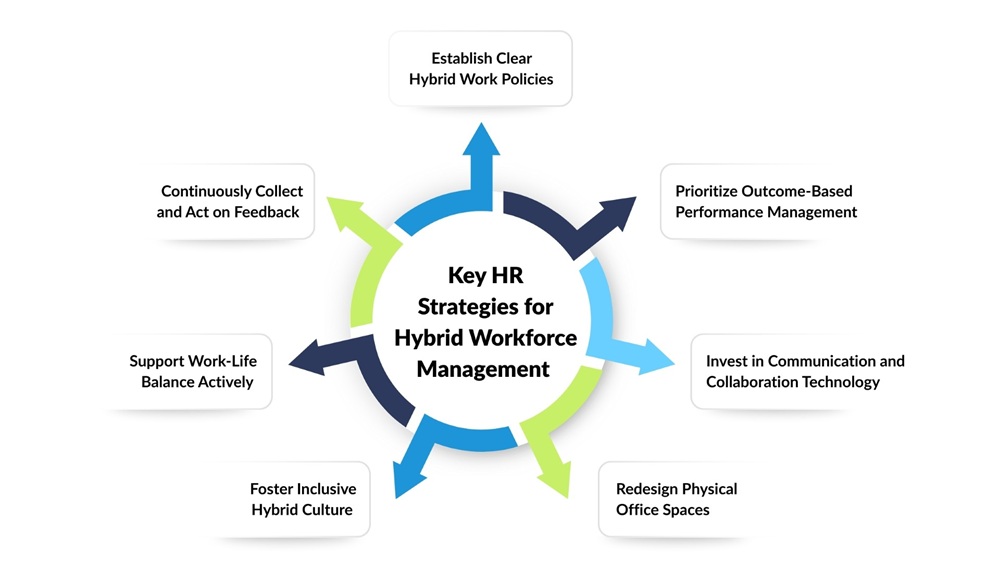
What It Means: Develop transparent guidelines on how hybrid work operates in your organization, including:
Why It Matters: Clear expectations prevent confusion and ensure fairness. Employees need to understand how hybrid work functions to operate effectively.
Action Steps:
Example: Spotify’s “Work from Anywhere” policy is literally 3 pages and translated into 20+ languages.
What It Means: Shift focus from monitoring work hours to measuring tangible results and contributions.
Why It Matters: Micromanagement destroys trust and productivity. Outcome-based management empowers employees and respects their autonomy.
Action Steps:
Example: Adobe scrapped ratings and moved to continuous check-ins, voluntary turnover dropped.
What It Means: Equip your hybrid workforce with the tools needed for seamless communication and collaboration.
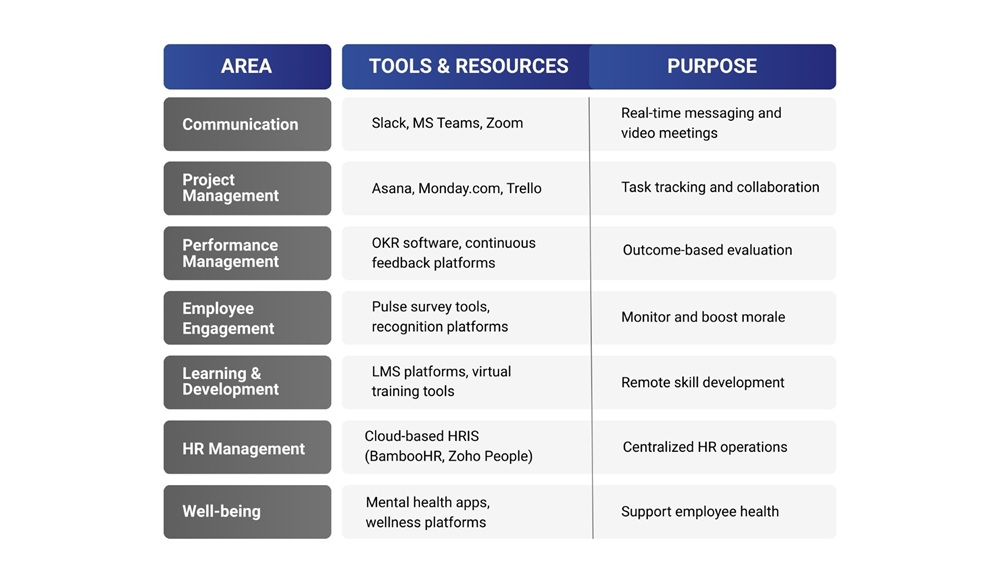
Essential Technology Stack:
Why It Matters: Technology enables hybrid work. Without proper tools, communication breaks down and productivity suffers.
Action Steps:
Example: Shopify spent $1,000 per employee on home offices and standardized on Google Workspace.
What It Means: Transform office environments to support hybrid work patterns rather than traditional full-time occupancy.
Modern Office Features:
Why It Matters: Office spaces must serve a purpose beyond providing desks. They should facilitate collaboration, culture-building, and activities better done in person.
Action Steps:
Example: Dropbox reduced its offices by 50% and turned the rest into “Dropbox Studios” focused on collaboration, in-office voluntary attendance jumped 3x.
What It Means: Create a culture where remote and in-office employees feel equally valued, connected, and included.
Action Steps:
Why It Matters: Without intentional inclusion efforts, hybrid models can create two-tier workforces where office employees have advantages.
Example: GitLab (100% remote) publishes every promotion rubric publicly.
What It Means: Go beyond policies to actively encourage healthy boundaries between work and personal life.
Action Steps:
Example: Bumble gave every employee unlimited PTO + mandatory 1-week company shutdowns twice a year; retention rose.
What It Means: Use real-time feedback mechanisms to understand what's working and what needs adjustment.
Feedback Methods:
Why It Matters: Hybrid work is still evolving. Organizations that listen and adapt quickly will succeed and those that don't will struggle with retention and productivity.
Action Steps:
Example: Buffer runs bi-weekly pulses and openly shares results + actions on a public Trello board; trust scores are 95%+.
Here's a practical toolkit for implementing successful hybrid work models:
Based on insights from successful organizations, here are the best practices that drive employee productivity in hybrid models:
Publish one simple, living hybrid handbook that every employee can find in seconds. Update it every quarter based on real feedback so the rules never feel outdated or hidden.
Measure what people deliver, not where or when they do it. Drop all surveillance tools, trust them to manage their time, and celebrate great work regardless of location.
Every leader completes mandatory training on leading distributed teams, giving outcome-focused feedback, and running inclusive meetings, because hybrid fails when managers aren’t ready.
Schedule regular in-person offsites, virtual coffee roulettes, and team focus weeks, so relationships stay strong and serendipity actually happens.
Keep a few non-negotiable rules (like remote-first meetings and core collaboration hours) while letting teams decide everything else that works best for them.
Even well-intentioned HR strategies can fail without awareness of these common mistakes:
The Mistake: Applying hybrid work policies differently across teams or departments, creating perceived unfairness.
The Fix: Ensure consistent application while allowing for role-specific needs. Document exceptions clearly and communicate transparently.
The Mistake: Unconsciously favoring employees who come to the office more frequently for opportunities, recognition, or promotions.
The Fix: Implement blind review processes and location-agnostic advancement criteria. Actively monitor for bias.
The Mistake: Designing systems and processes that work well for office workers but create barriers for remote employees.
The Fix: Test all processes from a remote-first perspective. Ensure remote workers have equal access to resources and information.
The Mistake: Implementing new collaboration tools without adequate training and support.
The Fix: Invest in comprehensive tech adoption programs. Provide ongoing support and address digital fatigue.
The Mistake: Expecting managers to successfully lead hybrid teams without specific training in distributed workforce management.
The Fix: Provide dedicated manager training on hybrid leadership, virtual team building, and outcome-based management.
With 82% of company leaders planning to continue remote work options and 83% of employees prioritizing work-life balance, hybrid work is clearly here to stay. The question isn't whether to adopt hybrid models, but how to implement them successfully.
HR professionals who master hybrid workforce management will position their organizations for long-term success. Those who resist or implement poorly will struggle with retention, productivity, and competitiveness in an increasingly flexible talent market.
The future of work is hybrid. The time for HR leadership is now.

Uncover the trends redefining workforce strategy, the skills shaping next-generation CHROs, and strategies to drive lasting impact. Explore insights and assess your readiness to lead the future of talent.
Download the Guide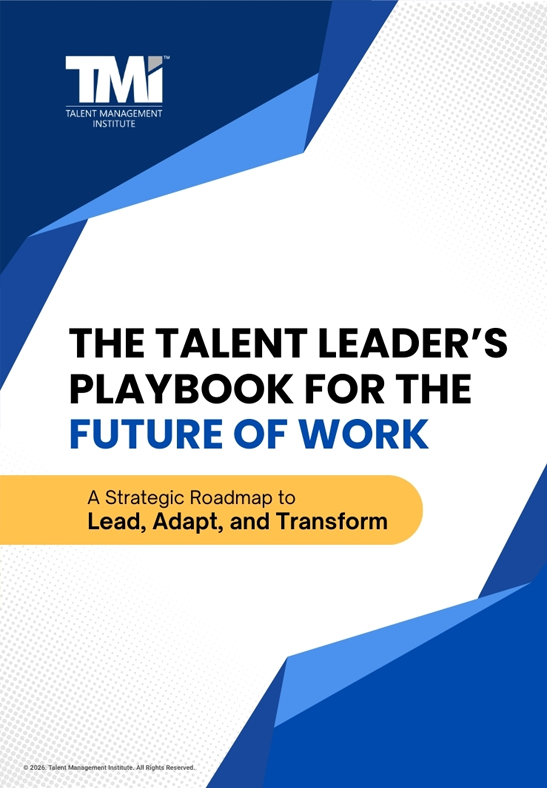

CredBadge™ is a proprietary, secure, digital badging platform that provides for seamless authentication and verification of credentials across digital media worldwide.
CredBadge™ powered credentials ensure that professionals can showcase and verify their qualifications and credentials across all digital platforms, and at any time, across the planet.

Please enter the License Number/Unique Credential Code of the certificant. Results will be displayed if the person holds an active credential from TMI.