We can't wait to hear from you
Connect
Discover how TMI credentials are designed to accelerate your career growth. Explore how TMI incorporates Talent Management into the practice and systems of Human Capital Management. Learn how you can steer your future confidently through TMI's research driven Talent Management standards. Fellow programs equip global HR professionals with the latest in Talent Management in the transformational way.
Explore how the TMP™, STMP™, and GTML™ credentials can take your HR career places, or add to the capabilities of your promising HR staff and leaders.
View CertificationsStrengthen your enterprise HR system by implementing the TMI-ETMS™ international standards.
Learn About TMI-ETMS™If you are interested in consulting, training or education, partner with TMI to join the global league of TMI aligned institutions, companies and industries.
Become a TMI PartnerLearn the latest about how Talent Management is transforming HR into a future oriented business hyperfunction.
Explore the TMI ApproachLearn the steps to earn your TMI certification, from application to successful completion and maintaining your credential.
TMI credentials include globally recognized digital badges, offering a portable and verifiable representation of your achievements.

Kickstart your Talent Management journey with TMI’s globally recognized certifications and resources to excel in your career.
Create myTMI Account TodayTMI Global and Associate Fellow programs turn HR professionals into global Talent Leaders who can drive growth with their superlative strategic ability, business perspective and readiness for change. Since 2024, more than 150 senior HR professionals and HR leaders from 46 global organizations across industries have completed these programs that establish new standards for the practice of talent management as a driver of organizational success and business competitiveness.
You can contact us here for more information.

TMI–ETMS10™ and TMI–ETMS14™ certified organizations are effective for restructuring Talent Management in an organization. With TMI, organizations are better, more agile and better prepared for challenges that are to come.
The TMI-Enterprise Talent Management Standards power enterprise HR with the latest in Talent Management.
To choose a TMI–ETMS™ version most appropriate for your organization!
Write to us via the contact form.

Partnering with TMI means building a powerful structure of Talent Management thought and practice resulting in business profits through standards, certifications and networks.
Get your HR staffers and managers TMI certified on Talent Management by adding TMI into your training regimen. One step toward embedding TMI credentials in your institutions curricula is to become a TMI-ETMS™ consulting partner. Join us to be a part of the groundbreaking work of Talent Management.

If you hold an elite international qualification in HR or a related discipline, possess a recognized HR credential, or studied HRM at a TMI-recognized institution, you may be eligible for an accelerated pathway to a TMI credential through QualiFly™ leading to TMP™, STMP™ or GTML™.
 Institutions
Explore Certification Bodies, Universities, B-Schools & Other Institutions recognized by TMI under the Q1, Q2, and Q3 Lists.
Check if your institution is recognized
TMI’s blogs cover the latest trends, insights, and best practices in HR and talent management.
Comprehensive guides covering talent development, HR metrics, key facts, and more.
Explore TMI's latest updates, announcements, news and press releases in our newsroom.
Strategic insights driving the future of talent, leadership, and global workforce excellence.
Dive into the inspiring journeys of TMI certification holders and learn how the certification has transformed their careers.
An Interview series featuring key advice from global talent leaders for future HR professionals.
TMI’s editorial team is comprised of researchers, writers, editors, proofreaders, and contributors with extensive experience in the HR and Talent Management space. The team scrupulously researches, analyzes and deliberates on each submission before concluding its suitability for our publications.

The power dynamics in hiring have fundamentally reversed. Before candidates submit applications, they conduct extensive research into organizational culture, values, leadership, and employee experiences. Research reveals that 69% of candidates will reject an offer if the employer brand feels inauthentic, while 88% of job seekers consider the employer brand before applying.
This shift represents more than changing preferences. Talented professionals possess unprecedented choice in employment options. When organizations maintain disconnected employer branding strategies that fail to reflect actual employee experiences, they systematically eliminate themselves from consideration by high-performers.
A misaligned employer brand creates cascading negative effects. Candidates who join based on inaccurate promises leave quickly upon discovering reality doesn't match marketing. This drives turnover, damages reputation through negative reviews, and creates expensive recruitment cycles. According to a study from Universum, companies with strong employer brands experience 28% lower turnover and 50% reduction in cost-per-hire, demonstrating the tangible business impact of authentic alignment.
Alignment extends far beyond consistent visual branding or polished marketing messages. True alignment occurs when the lived employee experience matches the promised one across every touchpoint and interaction.
This alignment operates across three critical layers that must synchronize perfectly:
When these three layers align, employer branding strategy amplifies talent acquisition effectiveness. Misalignment between any layers creates friction that repels quality candidates while attracting mismatched ones.
A step-by-step framework to create an employer brand that attracts, engages, and retains the talent your organization needs to succeed.
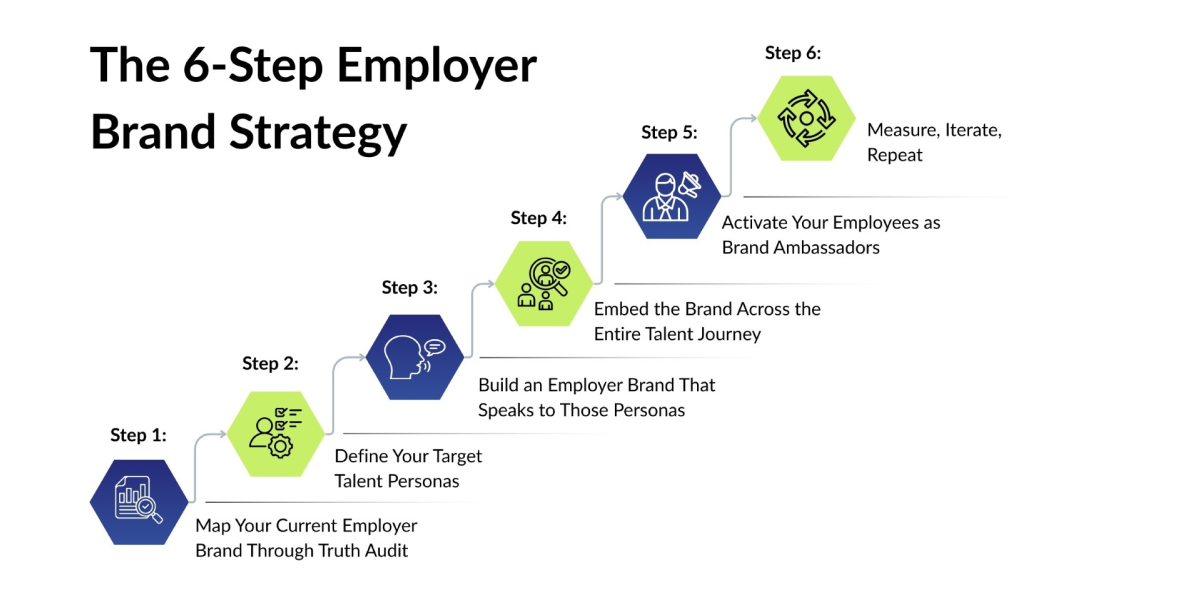
Understanding current reality precedes any strategic refinement. Organizations must conduct rigorous assessments of how employees, candidates, and external audiences perceive the employer's brand versus how leadership believes it appears.
Deploy confidential pulse surveys asking employees direct questions about workplace reality. Explore satisfaction with culture, growth opportunities, leadership effectiveness, work-life balance, and alignment between organizational values and actions. Stay interviews with high performers reveal what keeps exceptional talent engaged.
Questions should probe specific experiences rather than seeking validation. "Describe a recent example of how leadership demonstrated our stated values" generates more useful insight than "Do you think leadership demonstrates our values?"
Systematically review Glassdoor, Comparably, Reddit, Blind, and emerging platforms like TikTok where employees and candidates discuss organizational realities. Look beyond average ratings to recurring themes in reviews. What specific elements receive consistent praise or criticism?
Monitor industry forums and communities where professionals in your sectors discuss employers. These unfiltered conversations reveal authentic perceptions that formal channels miss.
Document what your employer branding materials promise across dimensions like culture, growth, flexibility, and impact. Then document what internal research reveals about actual employee experiences in these areas. Create a simple matrix showing alignment and gaps.
High Alignment Areas represent authentic differentiators worthy of emphasis in employer branding strategy. If you promise collaborative culture and employees to consistently describe strong teamwork, amplify this truth.
Messaging Gaps indicate promises that don't reflect reality. These require either operational changes to deliver promises or messaging adjustments to reflect truth. Continuing to promote disconnected claims damages credibility.
Distinguish elements that genuinely differentiate your organization from baseline expectations. Health insurance, competitive salaries, and professional development opportunities represent table stakes in most markets. Their absence disqualifies you, but their presence doesn't distinguish you.
Authentic differentiators emerge from unique strengths: perhaps radical transparency in decision-making, exceptional flexibility in work arrangements, concentration of technical expertise in specific domains, or demonstrated commitment to particular social missions.
Generic employer branding attracts generic candidates. Precision requires detailed understanding of the specific professionals you need to attract and what motivates their employment decisions.
Rather than thinking about "software engineers" or "marketing managers," develop 3-4 detailed personas representing your ideal employees. These personas should capture psychographic dimensions beyond functional skills.
Consider developing personas like:
Each persona includes demographics, career stage, values, lifestyle priorities, decision-making factors, and information sources they trust. This specificity enables targeted employer branding strategy that resonates deeply with particular audiences.
Document what matters most to each persona beyond compensation. Do they prioritize continuous learning, work-life integration, leadership opportunities, technical innovation, social impact, or creative expression? Understanding motivation enables authentic connections.
Map lifestyle considerations influencing employment decisions. Personas might prioritize flexibility for caregiving responsibilities, urban environments for cultural access, remote options for geographic freedom, or structured paths for career advancement certainty.
Test persona assumptions against actual hiring data. Interview recent high-performing hires about their decision factors, what attracted them to your organization, what nearly caused them to decline offers, and how reality compares to expectations.
Patterns across these conversations validate or refine persona definitions. If your hypothesis suggests technical challenge drives engineering candidates but conversations reveal team culture mattered most, adjust accordingly.
With clear understanding of reality and target audiences, craft employer branding strategy that authentically positions your organization for ideal candidates.
Distill your unique value proposition into a concise statement capturing what you offer employees. This promise should be specific enough to differentiate while broad enough to encompass diverse roles.
Strong employer brand promises avoid generic language applicable to any organization. "Great culture and growth opportunities" fails the specificity test. "Where climate scientists drive product strategy" or "Remote-first teams solving healthcare access challenges" communicate distinct values.
The promise must be defensible. Can you provide concrete evidence supporting this positioning? Will employees recognize this description as authentic? Would competitors struggle to make identical claims credibly?
Support your core promise with specific proof points demonstrating how you deliver on commitments. Each pillar should include tangible examples, employee testimonials, metrics, and stories bringing abstract promises to concrete reality.
If your promise emphasizes rapid career growth, proof pillars might include average time-to-promotion data, examples of employees advancing from entry level to leadership, investment in learning and development programs, and testimonials describing growth experiences.
Authentic employee storytelling has proven particularly impactful, as candidates are three times more likely to trust employee voices than executive messaging.
While maintaining a consistent core brand, adjust emphasis based on persona priorities. Your climate-conscious engineer persona receives messaging highlighting environmental impact metrics and sustainability initiatives. Your remote-first designer persona sees content demonstrating asynchronous collaboration tools and global team dynamics.
This customization doesn't mean creating entirely different brands. The foundation remains constant while surface-level messaging resonates with specific motivations and concerns.
Employer branding strategy must permeate every candidate's interaction from initial awareness through onboarding and beyond. Inconsistent experiences at any stage undermine overall alignment.
Career websites serve as primary employer brand vehicles. Move beyond listing benefits and open positions to immersively communicating culture, impact, and employee experiences. Feature authentic voices, real workspaces, and tangible outcomes.
LinkedIn presence should consistently reinforce employer brand promise through content sharing, employee spotlights, and thought leadership. Job board descriptions require crafting beyond standard requirements to explain why roles matter and how they connect to organizational mission.
Campus recruitment events, industry conferences, and community engagement opportunities represent employer brand in three-dimensional environments where candidates evaluate cultural fit directly.
Personalized recruiter outreach demonstrates respect and genuine interest rather than transactional processing. Reference to specific aspects of candidate backgrounds showing thoughtful consideration.
Realistic job previews during interviews provide an honest perspective on role challenges, team dynamics, and expectations. Organizations providing authentic work previews, including challenges alongside opportunities, attract better-matched candidates.
Interview processes themselves communicate culture. Do you demonstrate collaboration in panel discussions? Do you respect candidate time through efficient scheduling? Do you provide transparent communication about the timeline and next steps?
Offer communications extend beyond compensation details to reiterate employer brand promises. Provide "first 90 days" materials outlining onboarding processes, initial projects, team introductions, and success metrics.
Address common concerns proactively. If candidates typically wonder about growth paths or work-life boundaries, include this information in offer packages rather than forcing them to ask.
The employer brand promise must remain visible throughout employment. Internal communications, recognition programs, development opportunities, and leadership behaviors should consistently reinforce the brand positioning that attracted employees initially.
When internal experiences diverge from recruitment promises, employees feel deceived. This drives turnover and generates negative external reputation that damages future recruitment.
Current employees represent the most credible employer brand ambassadors. Their authentic advocacy carries weight that corporate messaging cannot replicate.
Employee advocacy delivers up to 2× higher engagement rates than corporate posts, making it among the most effective employer branding strategies. Platforms like EveryoneSocial and GaggleAMP enable systematic sharing of company content while maintaining authentic employee voices.
Provide employees with shareable content, suggested messaging, and easy mechanisms for amplifying organizational stories across their networks. Make participation voluntary and simple rather than mandatory and burdensome.
Create resources employees can use to celebrate professional milestones: promotions, work anniversaries, project completions, or team achievements. These kits might include graphics, suggested social media copy, and talking points.
When employees naturally share positive experiences, their networks receive authentic endorsements more persuasive than paid advertising.
Recognition, small rewards, or gamification can encourage participation without mandating specific actions or messaging. The goal remains authentic sharing that reflects genuine enthusiasm rather than corporate propaganda.
Employees should feel empowered to share honest perspectives, including constructive feedback. Overly controlled messaging appears inauthentic and reduces credibility.
Strategic employer branding requires continuous measurement linking activities to business outcomes. Track both leading indicators predicting future performance and lagging indicators confirming results.
Candidate NPS(Net Promoter Score) measures whether candidates would recommend your organization to others regardless of the hiring outcome. High scores indicate positive experiences aligned with employer brand promises.
Offer acceptance rate by persona reveals whether your employer branding strategy resonates with specific target audiences. Low acceptance in particular personas suggest messaging misalignment requiring adjustment.
Percentage of hires from employee referrals demonstrates internal belief in employer brand sufficient to stake personal reputation on recommendations. Strong employer brands see higher referral rates as employees become brand advocates.
Glassdoor rating trends provide external validation of employer brand authenticity. Improving ratings suggest alignment between promises and reality while declining ratings indicate growing gaps.
Time-to-fill for hard-to-hire roles measures how effectively employer branding attracts scarce talent. Strong brands reduce time required to identify and close qualified candidates.
Schedule regular reviews of employer brand performance across all metrics. Analyze trends, identify emerging issues, and adjust messaging within 48 hours when needed.
Rapid iteration enables responsive employer branding strategy that adapts to changing market conditions, internal developments, and candidate feedback. Quarterly reviews balance stability with agility.
Examining organizations that achieved authentic alignment between employer branding strategy and talent acquisition illuminates practical application of these principles.
GitLab built its entire employer brand around radical transparency and all-remote operations long before pandemic-driven remote work trends. The organization documented everything publicly, from compensation formulas to decision-making processes.
This commitment to transparency and remote flexibility attracted talent valuing autonomy, flexibility, and open communication over traditional office culture. GitLab's employer brand didn't merely promote remote work as a perk but positioned it as fundamental to organizational identity.
The alignment between promise and reality enabled GitLab to attract global talent while competitors struggled with geographic limitations.
Patagonia centers its employer brand on environmental activism and corporate responsibility, explicitly prioritizing sustainability over short-term profits. The organization's famous "Don't Buy This Jacket" campaign demonstrated authentic commitment to values.
This positioning attracts professionals motivated by environmental impact who accept potentially lower compensation in exchange for meaningful work. Patagonia's employer brand filters candidates effectively, drawing those aligned with environmental mission while deterring those prioritizing other factors.
The organization delivers on promises through extensive environmental programs, sustainable business practices, and activism support, maintaining alignment between external brand and internal reality.
Canva emphasizes creative empowerment and democratizing design access through its employer brand. The organization positions itself as enabling creativity for millions while fostering creative culture internally.
This message resonates with designers and creative professionals seeking meaningful impact through accessible tools. Canva's employer branding showcases actual employee work, creative processes, and product impact rather than generic culture claims.
The alignment between creative mission, product impact, and internal culture creates a powerful employer brand attracting design talent globally.
Employer branding has transcended marketing function to become a strategic imperative combining risk management and growth enablement. Organizations cannot afford misalignment between brand promises and employee realities. According to Amra & Elma, 92% of candidates would change jobs for companies with excellent employer brands.
The distinction between successful and struggling organizations increasingly depends on employer brand authenticity. Align what you promise with what you deliver, and recruitment transforms from transactional filling of roles to strategic attraction of professionals who stay, perform, and become vocal advocates.
Companies with strong employer brands achieve 50% more qualified applicants and see hiring cycles speed up by 1-2× when the employer brand is strong. These improvements translate directly to competitive advantage in talent markets where qualified professionals remain scarce.
Begin today. The talent you seek is already evaluating your employer's brand, whether you've intentionally crafted it or allowed it to develop through neglect. Take control of your narrative, ensure alignment across all touchpoints, and transform employer branding from liability into strategic asset driving sustainable talent acquisition success.

Uncover the trends redefining workforce strategy, the skills shaping next-generation CHROs, and strategies to drive lasting impact. Explore insights and assess your readiness to lead the future of talent.
Download the Guide

CredBadge™ is a proprietary, secure, digital badging platform that provides for seamless authentication and verification of credentials across digital media worldwide.
CredBadge™ powered credentials ensure that professionals can showcase and verify their qualifications and credentials across all digital platforms, and at any time, across the planet.

Please enter the License Number/Unique Credential Code of the certificant. Results will be displayed if the person holds an active credential from TMI.