We can't wait to hear from you
Connect
Discover how TMI credentials are designed to accelerate your career growth. Explore how TMI incorporates Talent Management into the practice and systems of Human Capital Management. Learn how you can steer your future confidently through TMI's research driven Talent Management standards. Fellow programs equip global HR professionals with the latest in Talent Management in the transformational way.
Explore how the TMP™, STMP™, and GTML™ credentials can take your HR career places, or add to the capabilities of your promising HR staff and leaders.
View CertificationsStrengthen your enterprise HR system by implementing the TMI-ETMS™ international standards.
Learn About TMI-ETMS™If you are interested in consulting, training or education, partner with TMI to join the global league of TMI aligned institutions, companies and industries.
Become a TMI PartnerLearn the latest about how Talent Management is transforming HR into a future oriented business hyperfunction.
Explore the TMI ApproachLearn the steps to earn your TMI certification, from application to successful completion and maintaining your credential.
TMI credentials include globally recognized digital badges, offering a portable and verifiable representation of your achievements.

Kickstart your Talent Management journey with TMI’s globally recognized certifications and resources to excel in your career.
Create myTMI Account TodayTMI Global and Associate Fellow programs turn HR professionals into global Talent Leaders who can drive growth with their superlative strategic ability, business perspective and readiness for change. Since 2024, more than 150 senior HR professionals and HR leaders from 46 global organizations across industries have completed these programs that establish new standards for the practice of talent management as a driver of organizational success and business competitiveness.
You can contact us here for more information.

TMI–ETMS10™ and TMI–ETMS14™ certified organizations are effective for restructuring Talent Management in an organization. With TMI, organizations are better, more agile and better prepared for challenges that are to come.
The TMI-Enterprise Talent Management Standards power enterprise HR with the latest in Talent Management.
To choose a TMI–ETMS™ version most appropriate for your organization!
Write to us via the contact form.

Partnering with TMI means building a powerful structure of Talent Management thought and practice resulting in business profits through standards, certifications and networks.
Get your HR staffers and managers TMI certified on Talent Management by adding TMI into your training regimen. One step toward embedding TMI credentials in your institutions curricula is to become a TMI-ETMS™ consulting partner. Join us to be a part of the groundbreaking work of Talent Management.

If you hold an elite international qualification in HR or a related discipline, possess a recognized HR credential, or studied HRM at a TMI-recognized institution, you may be eligible for an accelerated pathway to a TMI credential through QualiFly™ leading to TMP™, STMP™ or GTML™.
 Institutions
Explore Certification Bodies, Universities, B-Schools & Other Institutions recognized by TMI under the Q1, Q2, and Q3 Lists.
Check if your institution is recognized
TMI’s blogs cover the latest trends, insights, and best practices in HR and talent management.
Comprehensive guides covering talent development, HR metrics, key facts, and more.
Explore TMI's latest updates, announcements, news and press releases in our newsroom.
Strategic insights driving the future of talent, leadership, and global workforce excellence.
Dive into the inspiring journeys of TMI certification holders and learn how the certification has transformed their careers.
An Interview series featuring key advice from global talent leaders for future HR professionals.
TMI’s editorial team is comprised of researchers, writers, editors, proofreaders, and contributors with extensive experience in the HR and Talent Management space. The team scrupulously researches, analyzes and deliberates on each submission before concluding its suitability for our publications.

Leadership changes critically affect organizational continuity. According to Diligent, only 35% of organizations have a formalized succession planning process, despite the fact that approximately 10,000 Baby Boomers will reach retirement age every day through 2030. This demographic shift presents an enormous challenge for businesses unprepared to replace experienced leaders systematically.
A comprehensive succession planning checklist provides the structure needed to identify, develop, and prepare future leaders before critical positions become vacant. Without this framework, organizations face rushed decisions, operational disruptions, and uncertainty that undermines confidence across all stakeholder groups.
This article presents a detailed approach to succession planning that addresses preparation, analysis, candidate development, transition management, and ongoing monitoring. Organizations that implement these practices create resilient leadership pipelines capable of sustaining performance through inevitable changes.
Succession planning represents the deliberate process of identifying and developing internal talent to fill critical leadership positions as they become available. This systematic approach ensures that when a leader departs, whether through planned retirement or unexpected circumstances, the organization has capable successors ready to step in seamlessly.
Historically, succession planning focused primarily on C-suite positions. However, modern organizations recognize the importance of preparing successors at multiple levels. According to Axios, the average CEO tenure is approximately eight years, providing a finite window to prepare top talent for future leadership roles. A structured process combined with regular development check-ins ensures that high-potential employees progress toward readiness when leadership transitions occur.
Effective planning templates streamline the organizational journey by defining purpose and outlining components essential to the process. These templates identify critical roles, specify competencies required, establish timelines, assess potential candidates, and create development plans that bridge skills gaps systematically.
This five-phase approach turns succession planning from a reactive exercise into a strategic advantage.
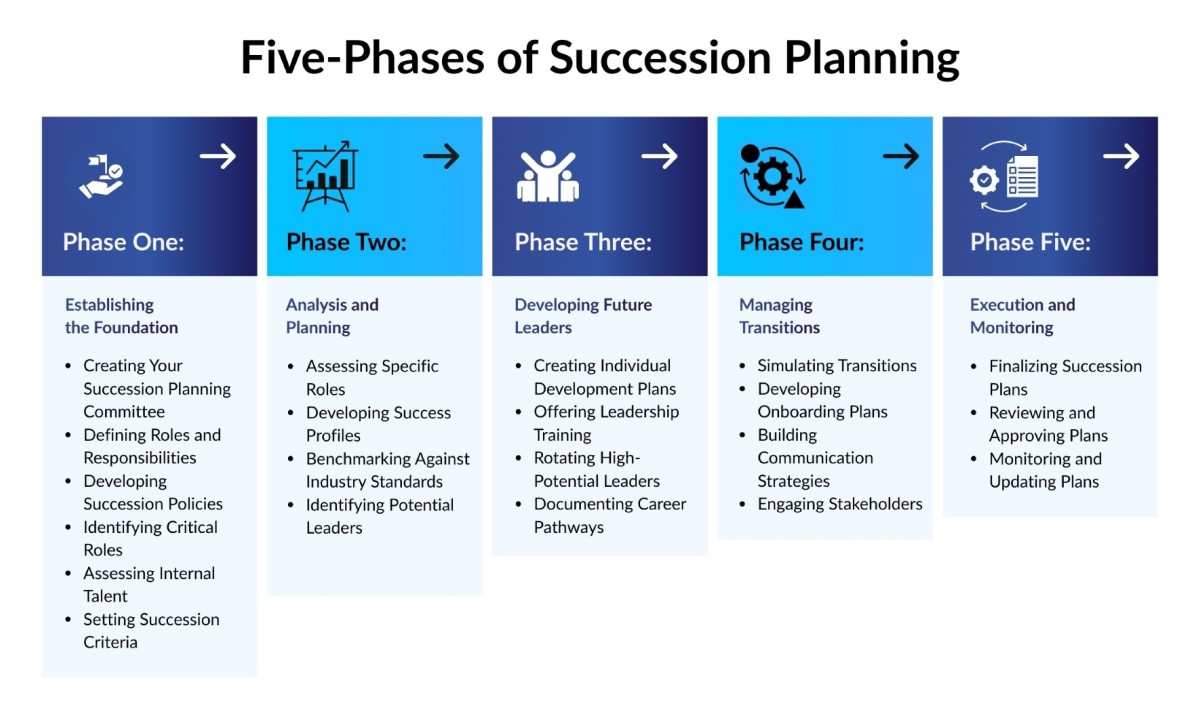
The first step involves identifying stakeholders who will oversee the process. For board succession plans, this typically includes the nominating and governance committee. C-level succession usually involves the CEO, other C-level leadership, the board of directors, and representatives from human resources.
Committee composition matters significantly. Members should bring diverse perspectives, understand organizational strategy, and possess the authority to make consequential decisions. The quality of succession processes depends directly on the board overseeing them. A high-performing board ensures planning is a strategic, forward-thinking initiative rather than a reactive necessity.
Within the committee structure, clear accountability must exist for each aspect of it. This includes identifying successors, managing planning templates, and overseeing final decisions. Ambiguity regarding responsibilities creates gaps where critical tasks fall through organizational cracks.
Documentation of these roles provides reference points when questions arise about process ownership. As teams change over time, written role definitions ensure continuity and prevent knowledge loss when committee members transition.
It requires structured processes that committee members can follow consistently. Formal policies address the purpose of it, define scope, and establish guidelines for decision making. These policies frequently address board composition requirements and organizational positions on diversity, equity, and inclusion.
Written policies create transparency and fairness in succession decisions. They establish standards against which candidates can be evaluated objectively rather than through subjective impressions that may reflect unconscious biases.
Organizations must determine which positions require succession plans. This includes individuals already expressing departure intentions, such as board directors anticipating retirement. However, it should also encompass C-suite and board positions with high organizational impact where unexpected departures would create significant disruption.
Critical role identification requires honest assessment of which positions, if left vacant, would most severely impact operations, strategy execution, or stakeholder confidence. This analysis often reveals that more positions qualify as critical than initially assumed.
Before launching broad talent searches, organizations should review existing leadership at all levels to identify promising internal candidates. This assessment can simplify searches or help committees determine organizational talent gaps that external candidates might fill.
Internal talent assessment provides dual benefits. It identifies development opportunities for existing employees while revealing where the organization lacks bench strength for particular competencies or experiences.
Successful candidates vary for each role. Organizations must consider the skills, competencies, experiences, and values that best serve their specific needs. Desired skills should address identified gaps. For example, if the board of directors has weak technological capabilities, prioritizing directors with technology backgrounds can improve board effectiveness.
Criteria should balance current organizational needs with anticipated future requirements. Leaders who succeeded in past environments may lack capabilities for challenges the organization will face during their tenure.
Committee members should evaluate the likelihood of succession for specific positions. This includes considering risks related to turnover, skills gaps, or unforeseen changes for each position. Assessments should also evaluate how likely board directors or executives are to leave voluntarily or whether the organization may need to take action based on poor performance.
Honest risk assessment enables appropriate prioritization. Positions with high departure likelihood and high organizational impact require immediate attention and robust development pipelines.
Detailed profiles for each role should include job descriptions, required competencies, and strategic objectives. While organizations may not need these descriptions immediately, they help visualize the right candidate type to drive the organization forward effectively.
Success profiles should extend beyond technical qualifications to include leadership qualities, cultural fit, and strategic thinking capabilities. The best technical performer may lack the interpersonal skills or strategic vision required for senior leadership.
Businesses should compare profiles they create with external trends and competitor practices. Does the CEO of a successful competitor come from a specific background? Are more companies appointing board chairs with particular expertise? While decisions should not rely entirely on benchmarks, external comparisons can validate identified needs.
Industry benchmarking also reveals emerging trends in leadership qualifications. As industries transform, the competencies required for success shift accordingly. External perspective prevents insularity in succession decisions.
Profiles should be compared to internal and external talent. For internal candidates, performance reviews, leadership assessments, and other insights help evaluate alignment with ideal candidate profiles. Companies should also track similar external talent to maintain pipelines for essential positions.
According to a Deloitte study, organizations that prioritize skills-based strategies are 63% more likely to achieve successful leadership transitions. This statistic highlights the importance of focusing on competencies rather than titles or tenure when identifying potential leaders.
Organizations with high-potential internal candidates should consider how to cultivate their talent. This might include addressing skills gaps, preparing them for potential challenges, or exposing them to responsibilities their new positions would require. Preparing internal candidates substantially smooths transitions because organizations avoid starting from scratch when board members or executives depart.
Individual development plans should be personalized based on each candidate's current capabilities and target role requirements. Generic training programs rarely produce the specific competencies needed for particular leadership positions.
Businesses should identify training opportunities that strengthen candidates' capabilities. No candidate possesses every skill or experience in ideal profiles. However, tools such as education programs, template libraries, mentorship connections, and executive coaching can round out their skills effectively.
Deloitte's High-Impact Learning Organization study reveals that organizations with strong learning cultures are 92% more likely to innovate and 52% more productive. This data underscores how leadership development benefits extend beyond succession planning to improve overall organizational performance.
Companies should pressure test promising candidates. If roles under consideration involve responsibilities candidates have not experienced, rotating them into new roles or special projects provides valuable exposure. These cross-departmental experiences increase awareness and understanding of functions they must master successfully.
Rotation programs create versatile leaders with broad organizational knowledge. Leaders who understand multiple functional areas make better strategic decisions and collaborate more effectively across organizational boundaries.
Businesses should articulate transition plans outlining how potential successors will move into new roles over time. While this luxury may not exist when leaders depart unexpectedly, staggered transition approaches prove effective when managing planned retirements.
Documented pathways provide candidates with clear development targets and timelines. This transparency increases engagement and retention among high-potential employees who understand their advancement opportunities.
Organizations need not wait for leaders to depart before determining whether transition plans will succeed. Testing readiness of potential candidates through interim role assignments or emergency succession simulations provides effective ways to observe how candidates respond to pressures of potential new roles.
Simulation exercises reveal capabilities that assessments and interviews cannot capture. Performance under pressure provides insight into decision making quality, composure, and judgment when stakes are high.
Businesses should prepare onboarding and integration plans for new leaders. Specificity about orientation processes and the sequence for assuming responsibilities helps avoid overloading individuals during their first days and weeks. This approach makes acclimation easier and supports eventual success.
Comprehensive onboarding extends beyond administrative tasks to include relationship building, strategic briefings, and cultural immersion. New leaders need time to understand organizational dynamics before making significant changes.
Change creates anxiety, particularly for employees working directly with positions being filled or candidates moving into new roles. Succession plans can disappoint employees who may have desired open roles. Businesses should plan how to communicate changes internally and externally to minimize disruption and gain stakeholder buy-in for chosen candidates.
Transparent communication builds trust and reduces resistance to leadership changes. Stakeholders who understand rationale for succession decisions are more likely to support new leaders during transitions.
Succession planning stakeholders include investors, board members, and employees. Conducting transparent succession processes makes stakeholders feel valued and builds confidence in process integrity. Regular updates ensure alignment and engagement throughout the planning initiatives.
Stakeholder engagement also provides feedback that can improve succession decisions. Different perspectives reveal considerations that might otherwise be overlooked in committee deliberations.
Organizations should document final plans detailing successors, estimated timelines, and contingency plans for unexpected departures. This creates trusted resources for navigating changes in positions. However, organizations must allow these documents to evolve as needs and available talent shifts.
Final plans should include both immediate succession scenarios and longer-term development pipelines. This dual timeframe ensures readiness for both planned and unexpected transitions.
Succession plans should be presented to boards of directors for approval. This does not represent final confirmation of candidates but validates acceptance of the planning processes and initial results. Gaining board buy-in helps smooth future transitions.
Board review also ensures alignment between planning and organizational strategy. Directors can provide perspective on whether proposed successors possess capabilities for anticipated challenges.
Succession plans should be living documents. Cultivated candidates could leave organizations or change career paths. Likewise, individuals planning retirement could decide to remain in the workforce longer. Organizations should schedule periodic reviews to ensure succession plans align with current organizational needs.
Regular monitoring also tracks progress of development activities and readiness of identified successors. This ongoing assessment enables timely adjustments when circumstances change.
The following best practices, drawn from leading organizations, help turn planning from a compliance checkbox into a genuine competitive advantage.
Organizations should not wait until critical needs arise before implementing succession plans. Beginning processes as early as possible recognize how planning supports business continuity and meets upcoming demands proactively.
It must be ongoing rather than episodic. Staying current with critical roles represents necessary organizational competency that ensures consistent development opportunities for employees.
It should involve teamwork across organizational levels. Leadership must drive processes while human resources play facilitative roles. Although senior leaders may focus on high-level positions they value most, their buy-in throughout processes makes planning activities more credible.
Human resources should encourage executives to demonstrate commitment by providing expert insights, participating actively in decision making, and coaching potential successors personally.
Investing in professional development enriches employee experiences and strengthens talent pipelines by closing skills gaps. Organizations should bolster learning cultures with sufficient development opportunities that equip employees with leadership qualities needed to advance careers.
Development experiences can include specialized training, conferences, seminars, workshops, professional certification platforms, mentoring programs, coaching initiatives, and cross-functional assignments.
Organizations should inform employees about succession plans and how they will be affected. Openly sharing procedures for naming, developing, and selecting potential successors builds trust and fosters engagement among employees.
Organizations should also be transparent with potential successors and manage their expectations appropriately. Being shortlisted for management positions does not guarantee selection. Plans remain tentative as business needs and circumstances can change without notice.
Organizations may be unable to announce every vacancy in advance when sudden employee exits occur. Comprehensive succession plans must address unexpected vacancies in essential positions, maintain stability, and minimize risks effectively.
Sudden departures cause disruptions. Organizations can prepare by temporarily distributing responsibilities or naming interim leaders who can step into each critical role. Regular reviews and updates ensure plans remain current.
The following two iconic examples show how deliberate, long-term preparation turns potential disruption into continued strength.
Apple maintained structured succession contingency plans long before Steve Jobs' eventual resignation due to health issues. Tim Cook was not chosen as successor at the last minute. His preparation began years before through high-pressure roles in supply chain management and global operations.
Cook acted as interim CEO multiple times when Jobs took medical leaves, allowing gradual adaptation. Leadership teams ensured knowledge transfer and executive mentoring so Cook gained deep insight into Apple's vision and internal culture. This preparation enabled smooth transition with minimal operational disruption.
McDonald's strategy was deeply structured and focused on progressive leadership development. When Jim Skinner anticipated retirement, Don Thompson received extensive grooming well in advance through progressively senior leadership roles including global operations leadership.
Thompson participated actively in strategy discussions and led high-stakes projects ensuring exposure to real decision-making scenarios. McDonald's used structured mentoring and executive coaching to refine his leadership qualities. When Skinner stepped down in 2012, Thompson transitioned seamlessly into the CEO role without leadership instability.
Succession planning strengthens organizational stability and prepares leadership changes. With complete templates, organizations can execute succession strategies while preparing to handle unexpected occurrences along the way.
The comprehensive checklist approach ensures organizations address all critical aspects of succession planning systematically. From establishing committees through ongoing monitoring, each phase contributes to building robust leadership pipelines capable of sustaining organizational performance.
Organizations that invest in systematic planning reduce risks associated with leadership transitions, maintain stakeholder confidence, and create cultures where talented employees see clear advancement pathways. The effort required to implement comprehensive planning processes pays dividends through improved organizational stability and performance over time.
As demographic shifts accelerate leadership transitions across industries, organizations with mature planning practices will possess significant competitive advantages over those scrambling to replace departed leaders reactively. The time to build these capabilities is before they become urgently necessary.

Uncover the trends redefining workforce strategy, the skills shaping next-generation CHROs, and strategies to drive lasting impact. Explore insights and assess your readiness to lead the future of talent.
Download the Guide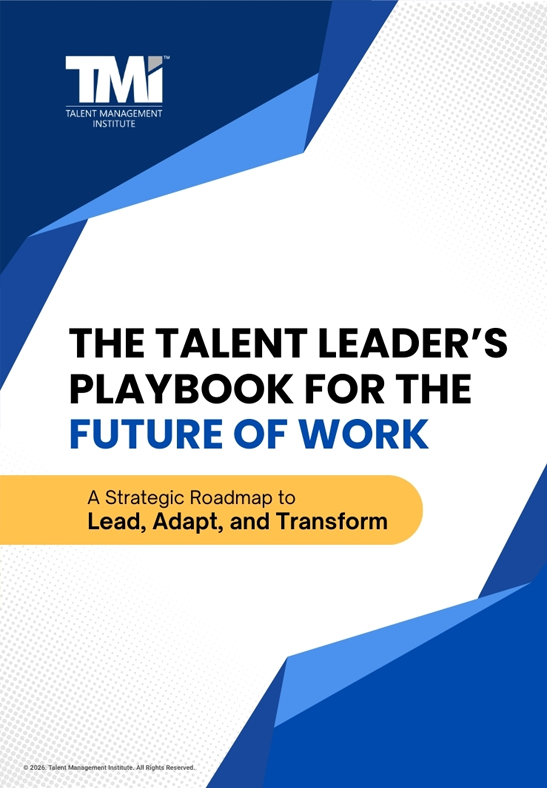

CredBadge™ is a proprietary, secure, digital badging platform that provides for seamless authentication and verification of credentials across digital media worldwide.
CredBadge™ powered credentials ensure that professionals can showcase and verify their qualifications and credentials across all digital platforms, and at any time, across the planet.

Please enter the License Number/Unique Credential Code of the certificant. Results will be displayed if the person holds an active credential from TMI.