We can't wait to hear from you
Connect
Discover how TMI credentials are designed to accelerate your career growth. Explore how TMI incorporates Talent Management into the practice and systems of Human Capital Management. Learn how you can steer your future confidently through TMI's research driven Talent Management standards. Fellow programs equip global HR professionals with the latest in Talent Management in the transformational way.
Explore how the TMP™, STMP™, and GTML™ credentials can take your HR career places, or add to the capabilities of your promising HR staff and leaders.
View CertificationsStrengthen your enterprise HR system by implementing the TMI-ETMS™ international standards.
Learn About TMI-ETMS™If you are interested in consulting, training or education, partner with TMI to join the global league of TMI aligned institutions, companies and industries.
Become a TMI PartnerLearn the latest about how Talent Management is transforming HR into a future oriented business hyperfunction.
Explore the TMI ApproachLearn the steps to earn your TMI certification, from application to successful completion and maintaining your credential.
TMI credentials include globally recognized digital badges, offering a portable and verifiable representation of your achievements.

Kickstart your Talent Management journey with TMI’s globally recognized certifications and resources to excel in your career.
Create myTMI Account TodayTMI Global and Associate Fellow programs turn HR professionals into global Talent Leaders who can drive growth with their superlative strategic ability, business perspective and readiness for change. Since 2024, more than 150 senior HR professionals and HR leaders from 46 global organizations across industries have completed these programs that establish new standards for the practice of talent management as a driver of organizational success and business competitiveness.
You can contact us here for more information.

TMI–ETMS10™ and TMI–ETMS14™ certified organizations are effective for restructuring Talent Management in an organization. With TMI, organizations are better, more agile and better prepared for challenges that are to come.
The TMI-Enterprise Talent Management Standards power enterprise HR with the latest in Talent Management.
To choose a TMI–ETMS™ version most appropriate for your organization!
Write to us via the contact form.

Partnering with TMI means building a powerful structure of Talent Management thought and practice resulting in business profits through standards, certifications and networks.
Get your HR staffers and managers TMI certified on Talent Management by adding TMI into your training regimen. One step toward embedding TMI credentials in your institutions curricula is to become a TMI-ETMS™ consulting partner. Join us to be a part of the groundbreaking work of Talent Management.

If you hold an elite international qualification in HR or a related discipline, possess a recognized HR credential, or studied HRM at a TMI-recognized institution, you may be eligible for an accelerated pathway to a TMI credential through QualiFly™ leading to TMP™, STMP™ or GTML™.
 Institutions
Explore Certification Bodies, Universities, B-Schools & Other Institutions recognized by TMI under the Q1, Q2, and Q3 Lists.
Check if your institution is recognized
TMI’s blogs cover the latest trends, insights, and best practices in HR and talent management.
Comprehensive guides covering talent development, HR metrics, key facts, and more.
Explore TMI's latest updates, announcements, news and press releases in our newsroom.
Strategic insights driving the future of talent, leadership, and global workforce excellence.
Dive into the inspiring journeys of TMI certification holders and learn how the certification has transformed their careers.
An Interview series featuring key advice from global talent leaders for future HR professionals.
TMI’s editorial team is comprised of researchers, writers, editors, proofreaders, and contributors with extensive experience in the HR and Talent Management space. The team scrupulously researches, analyzes and deliberates on each submission before concluding its suitability for our publications.

Today, organizations face a critical challenge: ensuring leadership continuity while maintaining business performance. With 3.3 million U.S. workers quitting their jobs in May 2025, companies can no longer afford to wait until someone leaves to think about their replacement. This is where the powerful combination of talent management and succession planning becomes essential.
While succession planning focuses on preparing for future leadership transitions, talent management provides the foundation that makes these transitions successful. Think of talent management as building the pipeline and succession planning as ensuring the right people flow through it at the right time. Together, they create a system that not only prepares organizations for change but actually strengthens them through it.
Talent management is a systematic and professional approach to attract, develop, and retain people with the suitable capacities, capabilities, and attitudes to meet current and future organizational needs. It's not just about hiring the best people; it's about nurturing them, helping them improve, and getting the best results for both the employee and the organization.
The concept has evolved significantly over time. What started as simple personnel management focused on hiring and compensation has transformed into a strategic function that encompasses performance management, succession planning, system integration, and leadership development. This evolution reflects a fundamental shift in how organizations view their workforce: not as replaceable resources, but as valuable assets that need continuous investment and development.
Talent management involves managing employees throughout their entire lifecycle with the organization. This includes:
Succession planning is the process of mapping key roles and skills within an organization and identifying and developing workers to take on critical positions when team members transition out. This proactive approach helps organizations deal with turnover of key employees, whether they leave due to resignation, retirement, promotion, or other reasons.
Effective succession planning requires both supporting workers so they can make successful career transitions and taking proactive steps to minimize lost productivity when someone leaves. While some companies focus succession planning primarily on senior leadership or executive roles, the most impactful succession plans prioritize cross-training and development opportunities at all levels across the organization.
According to research commissioned by Express Employment Professionals, 70% of hiring decision-makers surveyed would prefer to train current employees for different roles before bringing on new workers. This preference highlights the value organizations place on developing internal talent rather than always looking externally for replacements.
Succession planning cannot exist in isolation; it needs the robust foundation that talent management provides. Here's how talent management directly supports and enables effective succession planning:
The first way talent management fuels succession planning is by ensuring there's actually a pipeline of talent to draw from. Through strategic recruitment and careful hiring decisions, organizations bring in people who not only fit current roles but have the potential to grow into leadership positions.
When interviewing and evaluating prospective workers, leadership and growth potential should be key factors in hiring decisions. This forward-thinking approach means that from day one, organizations are thinking about not just what someone can do now, but what they might be capable of in the future.
Talent management systems help organizations systematically identify individuals who show exceptional promise. Through performance management processes, skill assessments, and regular evaluations, companies can spot employees who demonstrate high capacity and competence.
These high-potential employees become the focus of targeted development efforts. Rather than treating all employees the same, organizations can invest extra resources in developing people who show the greatest potential to move into critical roles. This doesn't mean neglecting other employees, it means being strategic about where intensive leadership development resources are directed.
Once high-potential employees are identified, talent management provides the framework for developing them. This includes:
Talent management creates an organizational culture where continuous learning and development are valued and expected. This culture is essential for succession planning because it means employees are always growing and preparing for new challenges.
When learning becomes part of the organizational DNA, succession planning becomes easier because employees are continuously developing new skills. They're not starting from zero when a leadership opportunity arises; they've been building capabilities all along.
One of the biggest challenges in succession planning is ensuring that the people you're developing actually stay with the organization long enough to step into those critical roles. Talent management directly addresses this through retention strategies.
By offering development opportunities, clear career paths, competitive compensation, and a positive work environment, talent management keeps talented employees engaged and committed to the organization. When employees see a future for themselves within the company, they're far more likely to stay and grow into succession roles rather than seeking opportunities elsewhere.
Talent management systems include performance management tools and assessment frameworks that provide objective data about employee capabilities and readiness. This removes much of the guesswork from succession planning.
For example, organizations might use a 9-box grid, a common talent management tool that assesses workers' performance and potential. Individuals in the "high performer, high potential" quadrant are clearly the most prepared to take on expanded roles. Those rated as "moderate performer, high potential" or "high performer, moderate potential" might be close but need additional development.
These standardized assessment tools help organizations make fair, data-driven decisions about who should be considered for succession roles, rather than relying on subjective opinions or personal relationships.
For talent management to effectively fuel succession planning, organizations need to integrate several key components:
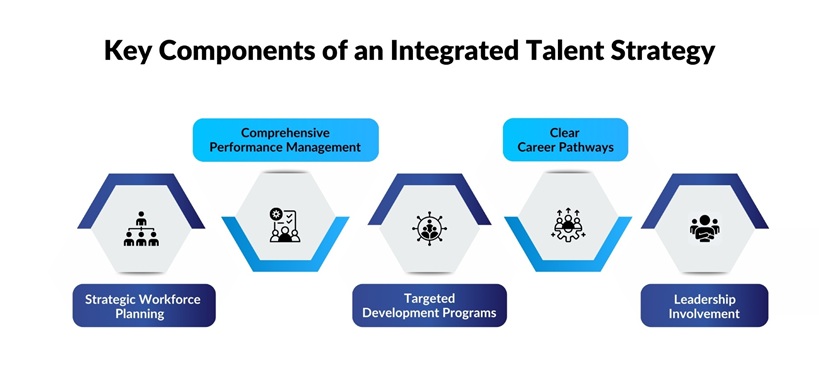
Employees need to understand what opportunities exist within the organization and what they need to do to pursue them. Transparency about career paths and succession opportunities helps employees see a future with the company and motivates them to develop the necessary skills.
Succession planning through talent management requires active involvement from senior leadership. Leaders need to mentor potential successors, provide stretch assignments, and create opportunities for high-potential employees to demonstrate their capabilities.
Great succession planning isn't just theory. Companies across different industries have proven that investing time in developing future leaders pays off. Here are some examples of organizations that got it right.
Apple
A well-known example of succession planning done right is Tim Cook's transition from COO to CEO of Apple when founder Steve Jobs passed away in 2011. This success was built on strong talent management principles:
First, Cook joined Apple in 2000 and formed a close partnership with Jobs over more than a decade. This extended timeline allowed for deep knowledge transfer about Apple's operations and Jobs' management philosophy.
Second, Apple established Apple University in 2008, a world-class executive training program designed to carry on Jobs' vision and retain top leadership talent through coaching and development. The company continues to prioritize succession planning through this program, with Cook stating in 2017 that part of his role as CEO is to prepare as many people as possible to be CEO.
This example demonstrates how talent management, through long-term development, mentorship, and formal leadership training, creates the foundation for successful succession.
Starbucks (Retail Industry)
Starbucks showed smart succession planning when Howard Schultz stepped down as CEO in 2017. Kevin Johnson, who joined Starbucks in 2015 as COO, worked closely with Schultz for two years before taking over. During this time, Johnson learned about Starbucks' culture, customer service philosophy, and global operations.
The smooth transition happened because Schultz actively mentored Johnson and involved him in major decisions. Johnson successfully led the company through digital transformation and expansion, proving that planned leadership transitions work better than sudden changes.
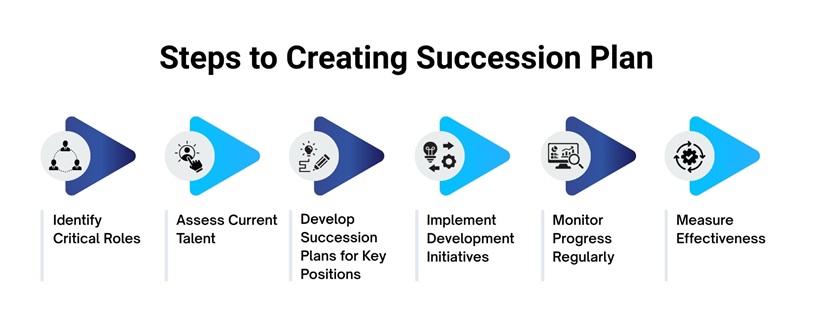
To leverage talent management for effective succession planning, consider these practical steps:
Organizations often face several challenges when implementing integrated talent management and succession planning:
Effective integration of talent management and succession planning benefits organizations, leaders, and individual employees:
For Organizations:
For Individuals:
Talent management and succession planning are not separate initiatives, they're deeply interconnected parts of a strategic approach to building organizational capability and resilience. Talent management provides the foundation, processes, and culture needed for succession planning to succeed.
By systematically identifying, developing, and retaining talented employees, organizations create the pipeline of capable leaders needed for the future. This proactive approach transforms succession planning from a reactive scramble when someone leaves to a strategic advantage that positions the organization for sustained success.
In a world where workforce mobility continues to increase, organizations that excel at integrating talent management with succession planning will have a decisive competitive advantage. They'll be prepared for inevitable transitions, maintain business continuity, and continuously strengthen their leadership capabilities.
The question isn't whether your organization needs to connect talent management and succession planning, it's whether you can afford not to. Start building your talent pipeline today, and you'll be prepared for whatever leadership transitions tomorrow brings.

Uncover the trends redefining workforce strategy, the skills shaping next-generation CHROs, and strategies to drive lasting impact. Explore insights and assess your readiness to lead the future of talent.
Download the Guide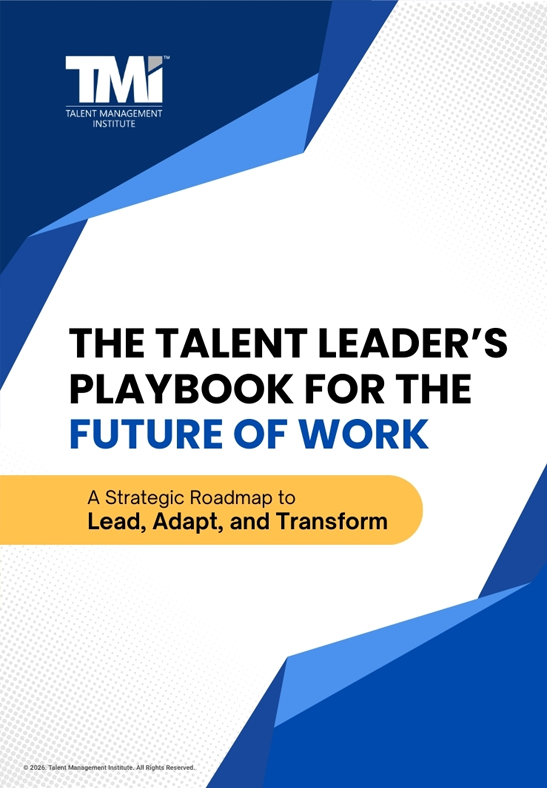

CredBadge™ is a proprietary, secure, digital badging platform that provides for seamless authentication and verification of credentials across digital media worldwide.
CredBadge™ powered credentials ensure that professionals can showcase and verify their qualifications and credentials across all digital platforms, and at any time, across the planet.

Please enter the License Number/Unique Credential Code of the certificant. Results will be displayed if the person holds an active credential from TMI.