We can't wait to hear from you
Connect
Discover how TMI credentials are designed to accelerate your career growth. Explore how TMI incorporates Talent Management into the practice and systems of Human Capital Management. Learn how you can steer your future confidently through TMI's research driven Talent Management standards. Fellow programs equip global HR professionals with the latest in Talent Management in the transformational way.
Explore how the TMP™, STMP™, and GTML™ credentials can take your HR career places, or add to the capabilities of your promising HR staff and leaders.
ExploreRevitalize your enterprise HR system through the TMI-ETMS by implementing the latest in international.
ExploreIf you are interested in consulting, training or education, partner with TMI to join the global league of TMI aligned institutions, companies and industries.
ExploreLearn the latest about how Talent Management is transforming HR into a future oriented business hyperfunction.
Explore
TMP™ is ideal for individuals starting in Talent Management, providing foundational knowledge and skills.
Download Program Brochure
STMP™ is tailored for mid-career HR professionals aiming to accelerate their growth and take on advanced roles.
Download Program Brochure
GTML™ is suited for senior HR professionals ready to lead global talent strategies and drive organizational transformation.
Download Program BrochureLearn the steps to earn your TMI certification, from application to successful completion and maintaining your credential.
TMI credentials include globally recognized digital badges, offering a portable and verifiable representation of your achievements.

Kickstart your Talent Management journey with TMI’s globally recognized certifications and resources to excel in your career.
Create myTMI Account TodayTMI Global and Associate Fellow programs turn HR professionals into global Talent Leaders who can drive growth with their superlative strategic ability, business perspective and readiness for change. In the last three years, more than 150 senior HR professionals and HR leaders from 46 global organizations across industries have completed these programs that establish new standards for the practice of talent management as a driver of organizational success and business competitiveness.
You can contact us here for more information.

TMI–ETMS10™ and TMI–ETMS14™ certified organizations are effective for restructuring Talent Management in an organization. With TMI, organizations are better, more agile and better prepared for challenges that are to come.
The TMI-Enterprise Talent Management Standards power enterprise HR with the latest in Talent Management.
To choose a TMI–ETMS™ version most appropriate for your organization!
Write to us via the contact form.

Partnering with TMI means building a powerful structure of Talent Management thought and practice resulting in business profits through standards, certifications and networks.
Get your HR staffers and managers TMI certified on Talent Management by adding TMI into your training regimen. One step toward embedding TMI credentials in your institutions curricula is to become a TMI-ETMS™ consulting partner. Join us to be a part of the groundbreaking work of Talent Management.

If you hold an elite international qualification in HR or a related discipline, possess a recognized HR credential, or studied HRM at a TMI-recognized institution, you may be eligible for an accelerated pathway to a TMI credential through QualiFly™ leading to TMP™, STMP™ or GTML™.
 Institutions
Explore Certification Bodies, Universities, B-Schools & Other Institutions recognized by TMI under the Q1, Q2, and Q3 Lists.
Check if your institution is recognized
TMI’s blogs cover the latest trends, insights, and best practices in HR and talent management.
Comprehensive guides covering talent development, HR metrics, key facts, and more.
Explore TMI's latest updates, announcements, news and press releases in our newsroom.
Strategic insights driving the future of talent, leadership, and global workforce excellence.
Dive into the inspiring journeys of TMI certification holders and learn how the certification has transformed their careers.
An Interview series featuring key advice from global talent leaders for future HR professionals.

Across global enterprises, the role of the Chief Human Resources Officer is undergoing a clear and observable transformation. Once positioned primarily as a functional leader, the CHRO is now increasingly involved in enterprise strategy, leadership continuity, and long-term capability governance.
This evolution is not theoretical. It is visible in how organizations structure executive authority, how boards engage with workforce strategy, and how HR leadership is embedded into decisions around technology, growth, and organizational resilience.
In several global organizations, the CHRO has moved from an advisory role into a central strategic position within the C-suite. This shift is evident in how frequently CHROs now participate in board discussions related to transformation, leadership risk, and enterprise readiness.
A notable illustration comes from Xerox, where Anne Mulcahy began her career in human resources before eventually becoming CEO. Her progression is often cited as an early example of how deep expertise in people systems, culture, and organizational capability can translate into enterprise leadership at the highest level.
More recently, boards across multinational firms have expanded the CHRO’s roles to include responsibility for enterprise change programs, post-merger integration, and leadership continuity planning. In these settings, the CHRO’s value lies in their ability to connect strategy to execution through people, structure, and culture.
Capability-based workforce design is moving from concept to operating model, because enterprise strategy now changes faster than fixed roles can keep up. For today’s CHRO, the strategic question is not “How many roles do we need?” It is “Which capabilities must be available, where, and how quickly, so the business can execute?” This reframes workforce planning as a continuous exercise in capability readiness, not annual headcount administration.
A practical example is Unilever’s internal talent marketplace, FLEX Experiences, which matches employees to project work based on skills and development needs, enabling teams to access capability where the business needs it, often beyond reporting lines and formal job boundaries. By treating employees as more than their job titles, the model supports faster internal mobility and more agile deployment of talent.
What this signals about the CHRO’s evolving role is clear, workforce design is becoming a portfolio strategy. Instead of filling static positions, CHROs are orchestrating how critical capabilities are built, validated, and redeployed, using a mix of internal talent marketplaces, targeted upskilling, external hiring, specialist/contingent expertise, and digital tools. In effect, the CHRO is shaping an enterprise system where capability can be mobilized on demand, aligned tightly to strategic priorities, and measured over time.
Leadership development and succession planning have become central governance concerns, particularly in global organizations with complex operating environments.
At Microsoft, the CHRO function has played a visible role in building leadership capability across levels, particularly under the stewardship of Kathleen Hogan. Leadership development at Microsoft is closely aligned with business strategy, with deliberate investment in cultural transformation, inclusive leadership, and future-ready management competencies.
This approach shows how the CHRO’s role has expanded beyond internal development programs. Leadership pipelines are now viewed as strategic assets, with boards expecting visibility into readiness, succession depth, and long-term leadership sustainability.
As AI becomes embedded in workforce decision-making, CHROs are increasingly responsible for ensuring that technology adoption aligns with organizational values and regulatory expectations.
At IBM, HR leadership has been directly involved in establishing internal AI ethics frameworks that govern how algorithmic tools are used in hiring, performance assessment, and workforce analytics. These frameworks emphasize transparency, bias mitigation, and human oversight in people-related decisions.
Similarly, organizations such as Accenture have positioned HR leaders as key contributors to enterprise-wide responsible AI initiatives, ensuring that workforce impact, reskilling, and trust considerations are addressed alongside technological deployment.
These examples highlight a growing expectation that CHROs act as stewards of human accountability in digital transformation, particularly where technology intersects with careers, evaluation, and opportunity.
The redesign of work itself has become a shared responsibility between HR and technology leadership.
At Amazon, large-scale automation in fulfilment and logistics has been accompanied by extensive reskilling initiatives overseen by HR leadership. Programs focused on retraining employees for technical, analytical, and operational roles demonstrate how CHROs influence the balance between automation and human capability development.
In these contexts, the CHRO’s role is not limited to workforce transition management. It extends to redefining how human judgment, creativity, and leadership complement automated systems, ensuring that productivity gains do not come at the cost of workforce stability or trust.
The global evolution of the CHRO role has direct implications for how talent leadership is defined, developed, and credentialed. The competencies now expected of senior HR leaders include enterprise strategy, workforce analytics, governance, technology literacy, and ethical leadership.
Professional standards and credentialing frameworks must reflect this expanded mandate. Advanced certifications in talent management increasingly emphasize capability architecture, leadership pipeline strategy, and responsible technology integration alongside traditional HR expertise.
For institutions focused on advancing talent leadership standards, this shift reinforces the need to prepare HR professionals for enterprise-level responsibility rather than functional execution alone.
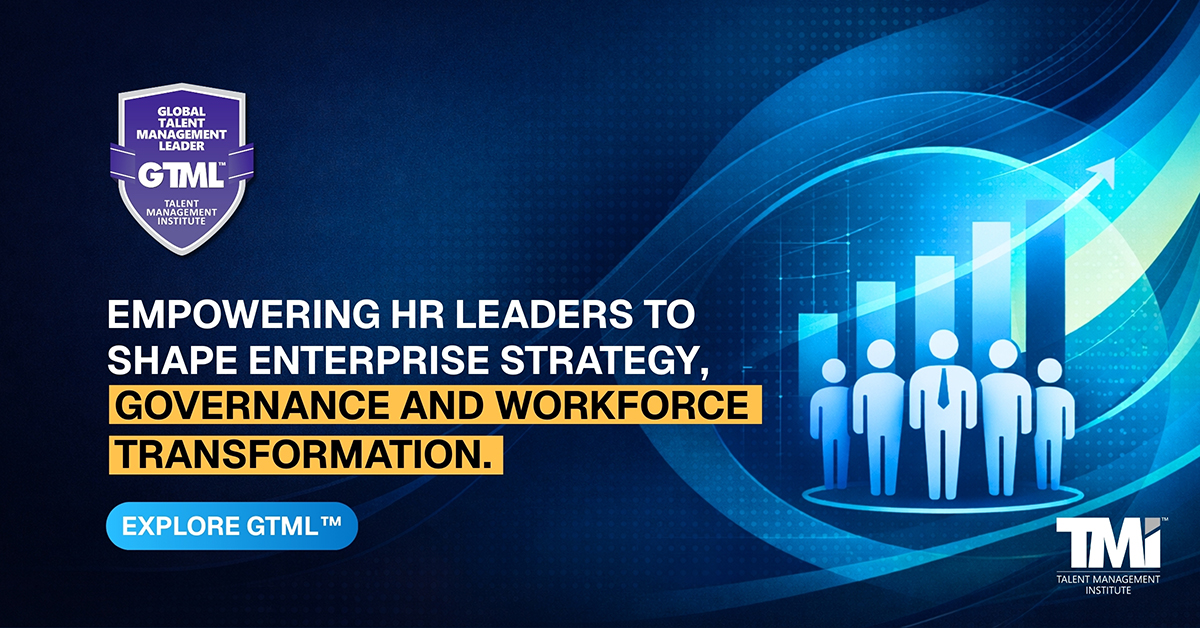
The repositioning of the CHRO is not confined to a single geography or market cycle. It reflects a structural change in how organizations govern people, capability, and leadership in an era defined by AI, skills, volatility, and continuous transformation.
As workforce strategy becomes inseparable from business strategy, the CHRO’s role continues to expand in scope, influence, and accountability. Organizations that recognize and support this evolution are better positioned to navigate uncertainty, sustain performance, and build leadership capacity for the future.

Uncover the trends redefining workforce strategy, the skills shaping next-generation CHROs, and strategies to drive lasting impact. Explore insights and assess your readiness to lead the future of talent.
Download the Guide

CredBadge™ is a proprietary, secure, digital badging platform that provides for seamless authentication and verification of credentials across digital media worldwide.
CredBadge™ powered credentials ensure that professionals can showcase and verify their qualifications and credentials across all digital platforms, and at any time, across the planet.

Please enter the License Number/Unique Credential Code of the certificant. Results will be displayed if the person holds an active credential from TMI.