We can't wait to hear from you
Connect
Discover how TMI credentials are designed to accelerate your career growth. Explore how TMI incorporates Talent Management into the practice and systems of Human Capital Management. Learn how you can steer your future confidently through TMI's research driven Talent Management standards. Fellow programs equip global HR professionals with the latest in Talent Management in the transformational way.
Explore how the TMP™, STMP™, and GTML™ credentials can take your HR career places, or add to the capabilities of your promising HR staff and leaders.
View CertificationsStrengthen your enterprise HR system by implementing the TMI-ETMS™ international standards.
Learn About TMI-ETMS™If you are interested in consulting, training or education, partner with TMI to join the global league of TMI aligned institutions, companies and industries.
Become a TMI PartnerLearn the latest about how Talent Management is transforming HR into a future oriented business hyperfunction.
Explore the TMI ApproachLearn the steps to earn your TMI certification, from application to successful completion and maintaining your credential.
TMI credentials include globally recognized digital badges, offering a portable and verifiable representation of your achievements.

Kickstart your Talent Management journey with TMI’s globally recognized certifications and resources to excel in your career.
Create myTMI Account TodayTMI Global and Associate Fellow programs turn HR professionals into global Talent Leaders who can drive growth with their superlative strategic ability, business perspective and readiness for change. Since 2024, more than 150 senior HR professionals and HR leaders from 46 global organizations across industries have completed these programs that establish new standards for the practice of talent management as a driver of organizational success and business competitiveness.
You can contact us here for more information.

TMI–ETMS10™ and TMI–ETMS14™ certified organizations are effective for restructuring Talent Management in an organization. With TMI, organizations are better, more agile and better prepared for challenges that are to come.
The TMI-Enterprise Talent Management Standards power enterprise HR with the latest in Talent Management.
To choose a TMI–ETMS™ version most appropriate for your organization!
Write to us via the contact form.

Partnering with TMI means building a powerful structure of Talent Management thought and practice resulting in business profits through standards, certifications and networks.
Get your HR staffers and managers TMI certified on Talent Management by adding TMI into your training regimen. One step toward embedding TMI credentials in your institutions curricula is to become a TMI-ETMS™ consulting partner. Join us to be a part of the groundbreaking work of Talent Management.

If you hold an elite international qualification in HR or a related discipline, possess a recognized HR credential, or studied HRM at a TMI-recognized institution, you may be eligible for an accelerated pathway to a TMI credential through QualiFly™ leading to TMP™, STMP™ or GTML™.
 Institutions
Explore Certification Bodies, Universities, B-Schools & Other Institutions recognized by TMI under the Q1, Q2, and Q3 Lists.
Check if your institution is recognized
TMI’s blogs cover the latest trends, insights, and best practices in HR and talent management.
Comprehensive guides covering talent development, HR metrics, key facts, and more.
Explore TMI's latest updates, announcements, news and press releases in our newsroom.
Strategic insights driving the future of talent, leadership, and global workforce excellence.
Dive into the inspiring journeys of TMI certification holders and learn how the certification has transformed their careers.
An Interview series featuring key advice from global talent leaders for future HR professionals.
TMI’s editorial team is comprised of researchers, writers, editors, proofreaders, and contributors with extensive experience in the HR and Talent Management space. The team scrupulously researches, analyzes and deliberates on each submission before concluding its suitability for our publications.

Today, the role of HR professionals has evolved far beyond traditional recruitment and policy management. Employees are no longer satisfied with just a paycheck. They seek organizations that align with their personal values and contribute to something meaningful. A purpose-driven workplace has shifted from being a nice benefit to an essential requirement for organizational success.
The relationship between employees and their workplace has fundamentally changed. Workers are asking deeper questions about their careers, moving beyond concerns about where and when they work to focus on why they work. This shift represents a critical turning point that HR professionals cannot afford to ignore.
According to a 2025 Gallup study, only 31% of U.S. employees report being engaged at work, marking a decade low figure with serious implications for retention and productivity. Meanwhile, 82% of workers say it is important for a company to have a purpose, yet many organizations remain fixated on transactional elements like compensation and benefits alone.
This disconnect creates a significant gap between what employees want and what companies provide. For HR professionals, bridging this divide has become a critical priority.
Creating a purpose-driven workplace isn't just good for employee morale; it delivers measurable business results. Companies with strong workplace purpose report 81% lower absenteeism and 41% lower turnover. Organizations with highly engaged employees are 21% more profitable than those with disengaged teams.
The resilience factor is equally compelling. During the 2008 financial crisis, Certified B Corporations, businesses that balance purpose and profit, were 63% more likely to survive the downturn than similar sized businesses. A study found that companies acting with a great sense of purpose outperform FTSE (Financial Times Stock Exchange) 100.
The workforce composition is shifting dramatically, and with it, workplace expectations. Millennials are expected to account for about 75% of the global workforce in 2025, with Gen Z representation growing steadily. These generations bring different priorities to the workplace.
A 2024 Deloitte report found that 44% of Gen Zs and 40% of Millennials have turned down job offers due to misaligned corporate values. The Cone Communications Millennial Employee Study revealed that 64% of Millennials won't take a job if their employer doesn't have strong social and environmental values. Gen Z has become the first generation to prioritize purpose over salary.
This demographic shift means purpose will only become more important over time. HR professionals must prepare for this reality now.
Here are five core strategies to guide HR’s efforts:
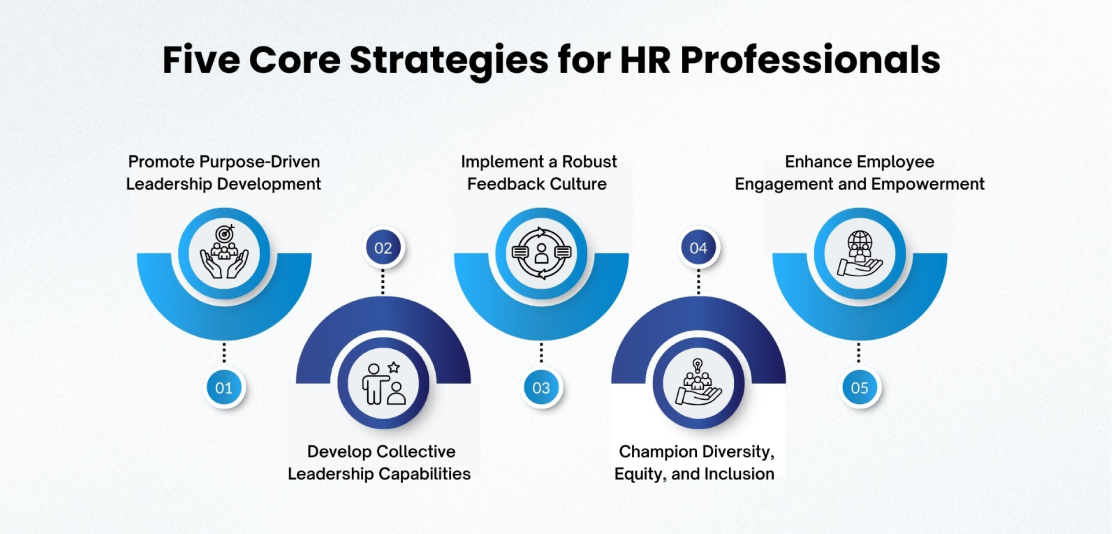
No organization can operate at a higher stage of development than the consciousness of its leadership. Deep systemic change occurs only when leaders themselves embody the change they want to see. HR professionals should encourage leaders to engage in self-awareness and leadership development programs.
Research on adult development reveals that leaders can progress through measurable stages of development, achieving higher levels of leadership effectiveness. This progression involves moving from reactive, fear-driven behaviors to purpose-driven leadership. HR can facilitate this development through coaching programs, 360-degree feedback, and developmental assessments. When leaders operate from a place of authenticity, they inspire their teams to do the same, creating a ripple effect throughout the organization.
Focusing on leadership teams rather than just individual leaders is essential for transformation. Effective collective leadership is your one competitive and strategic advantage that no one can copy. Without it, transformation will not happen.
HR should facilitate team development programs that enhance collaboration, communication, and shared accountability among leadership teams. This approach ensures that leadership practices remain consistent and aligned with organizational goals. Collective leadership development can be achieved through team building activities, collaborative workshops, and collective leadership assessments.
Creating a culture of continuous feedback is vital for fostering growth and development. Regular, constructive feedback helps individuals at all levels improve and adapt. HR professionals play a pivotal role in establishing feedback-rich environments by promoting open communication and ensuring that feedback mechanisms are in place.
Implementing 360-degree feedback processes and encouraging frequent check-ins between managers and their teams are effective strategies. Training leaders to provide and welcome feedback constructively enhances this culture. When feedback is normalized and encouraged, it builds trust and transparency, leading to a more dynamic and responsive workplace.
A diverse and inclusive environment fosters innovation and creativity while ensuring all employees feel valued and respected. This sense of belonging is essential for employees to connect with the organization's higher purpose.
HR professionals can champion this by implementing policies and practices that promote equal opportunities and fair treatment. This includes bias training, diverse hiring practices, and inclusive leadership development programs. Moving beyond hiring quotas to create an inclusive culture where all employees feel they belong should be the ultimate goal.
Companies like Unilever have set the standard with their Sustainable Living Plan, which includes DEI goals and measurable progress tracking. Employee resource groups can foster community within the workplace, providing spaces where employees can bring their whole selves to work.
Engaged and empowered employees are more likely to be motivated, productive, and committed to organizational goals. HR can encourage strategies that give employees a sense of ownership and control over their work.
This includes offering opportunities for professional development, recognizing and rewarding contributions, and providing platforms for employees to voice their ideas and concerns. Empowering employees also involve creating psychologically safe environments where everyone feels valued and respected.
Here, we outline practical implementation steps to embed purpose into your organization, enhancing both employee satisfaction and corporate impact.
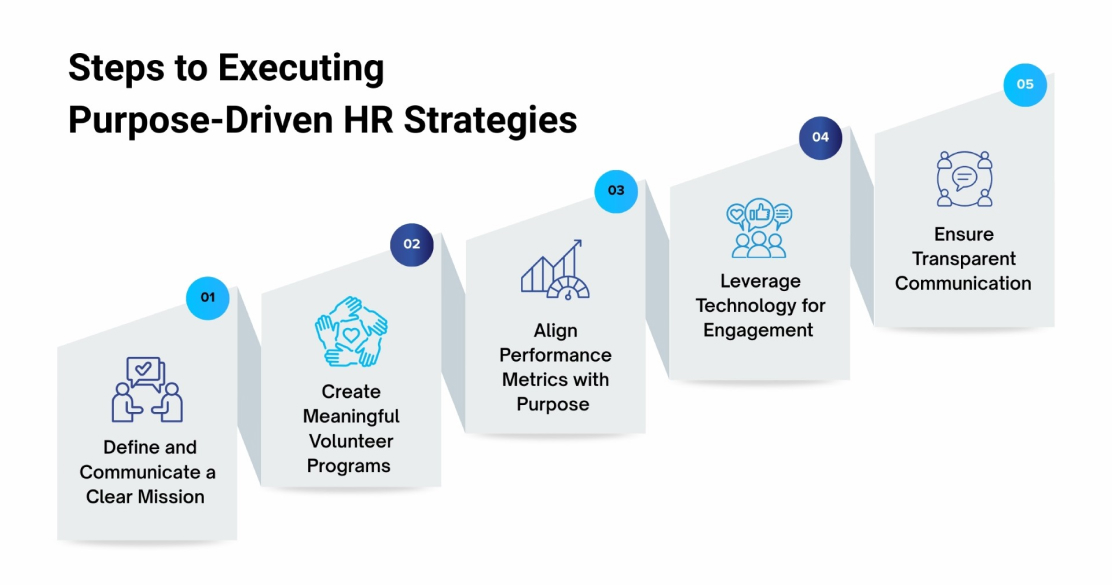
Develop a mission statement that reflects the company's values and impact beyond financial success. Integrate this mission into onboarding, performance reviews, and leadership messaging. Salesforce's 1-1 model, where 1% of equity, product, and employee time is donated to charitable causes, exemplifies this approach.
Allow employees to participate in corporate social responsibility projects. Create volunteer programs with paid time off for community work. Patagonia's environmental activism gives employees opportunities to contribute to sustainability initiatives, strengthening their connection to company values.
Integrate Environmental, Social, and Governance (ESG) metrics into employee performance reviews. Set KPIs related to sustainability, diversity, and ethical business practices. Some Fortune 500 companies now tie executive bonuses to sustainability and DEI outcomes, demonstrating serious commitment to purpose.
Utilize HR tech platforms to track engagement, measure impact, and gather feedback. Implement digital tools for real-time communication about company purposes. Microsoft's Viva employee experience platform integrates purpose-driven engagement tools, making it easier for employees to stay connected to organizational missions.
Hold regular town halls where leadership discusses mission driven achievements and goals. Encourage open dialogue between employees and executives about the company's impact. Cisco's weekly all hands meetings allow employees to ask direct questions to executives, fostering transparency and trust.
Several organizations have successfully embedded purpose into their workplace culture, providing valuable blueprints for other companies.
To assess the effectiveness of purpose-driven strategies, HR professionals should track specific metrics:
Regularly analyzing these metrics provides actionable insights into areas for improvement and helps HR teams refine their approach.
Building a purpose-driven workplace is not a one-time initiative but an ongoing commitment that HR professionals must champion. The evidence is clear: when employees find meaning in their work, they become more engaged, motivated, and committed to company success.
HR teams play a crucial role in integrating purpose into the organization's DNA. By promoting leadership development, facilitating collective leadership, implementing feedback culture, championing diversity and inclusion, and enhancing employee engagement, HR can drive transformational change.
In the current context of tight labor markets and changing employee expectations, companies need to use every tool available to attract and retain talent. Organizations that embrace purpose will not only attract and retain top talent but also achieve sustainable growth and positive societal impact.
The question is no longer whether organizations should become more purpose-driven, but when and how. For HR professionals with strong business acumen, the opportunity is clear: connect company level purpose with employee level purpose, understand how organizational values reflect the broader world, and work with management to ensure the company lives by these values in practice.
Now is the time for HR professionals to take the lead in fostering workplaces where employees don't just work but belong and contribute to something greater. The result will be a more productive, engaged, and motivated workforce ready to face the challenges of tomorrow.

Uncover the trends redefining workforce strategy, the skills shaping next-generation CHROs, and strategies to drive lasting impact. Explore insights and assess your readiness to lead the future of talent.
Download the Guide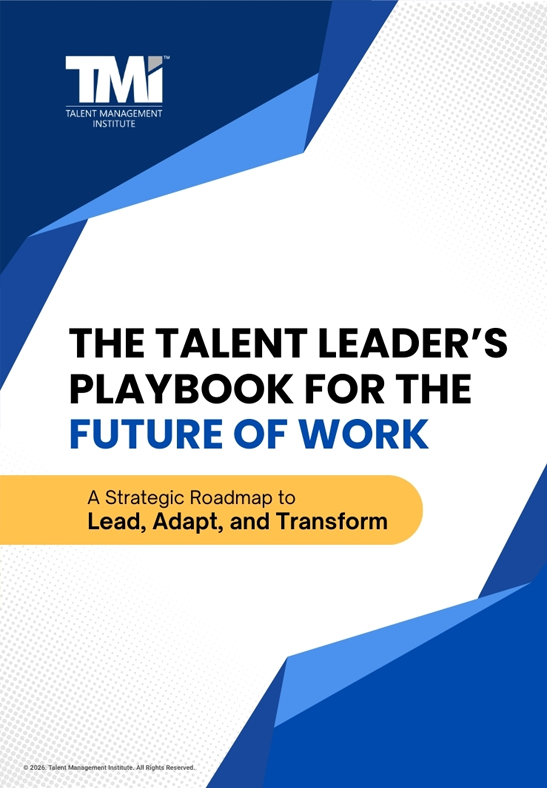

CredBadge™ is a proprietary, secure, digital badging platform that provides for seamless authentication and verification of credentials across digital media worldwide.
CredBadge™ powered credentials ensure that professionals can showcase and verify their qualifications and credentials across all digital platforms, and at any time, across the planet.

Please enter the License Number/Unique Credential Code of the certificant. Results will be displayed if the person holds an active credential from TMI.