We can't wait to hear from you
Connect
Discover how TMI credentials are designed to accelerate your career growth. Explore how TMI incorporates Talent Management into the practice and systems of Human Capital Management. Learn how you can steer your future confidently through TMI's research driven Talent Management standards. Fellow programs equip global HR professionals with the latest in Talent Management in the transformational way.
Explore how the TMP™, STMP™, and GTML™ credentials can take your HR career places, or add to the capabilities of your promising HR staff and leaders.
View CertificationsStrengthen your enterprise HR system by implementing the TMI-ETMS™ international standards.
Learn About TMI-ETMS™If you are interested in consulting, training or education, partner with TMI to join the global league of TMI aligned institutions, companies and industries.
Become a TMI PartnerLearn the latest about how Talent Management is transforming HR into a future oriented business hyperfunction.
Explore the TMI ApproachLearn the steps to earn your TMI certification, from application to successful completion and maintaining your credential.
TMI credentials include globally recognized digital badges, offering a portable and verifiable representation of your achievements.

Start your Talent Management career with TMI’s globally recognized certifications and resources to excel in your career.
Create myTMI Account TodayTMI Global and Associate Fellow programs turn HR professionals into global Talent Leaders who can drive growth with their superlative strategic ability, business perspective and readiness for change. Senior HR professionals and HR leaders from global organizations across industries have completed these programs, which establish new standards for the practice of talent management as a driver of organizational success and business competitiveness.
You can contact us here for more information.

TMI-ETMS10™ and TMI-ETMS14™ certified organizations are effective for restructuring Talent Management in an organization. With TMI, organizations are better, more agile and better prepared for challenges that are to come.
The TMI-Enterprise Talent Management Standards power enterprise HR with the latest in Talent Management.
To choose a TMI-ETMS™ version most appropriate for your organization!
Write to us via the contact form.

Partnering with TMI means building a powerful structure of Talent Management thought and practice resulting in business profits through standards, certifications and networks.
Get your HR staffers and managers TMI certified on Talent Management by adding TMI into your training regimen. One step toward embedding TMI credentials in your institutions curricula is to become a TMI-ETMS™ consulting partner. Join us to be a part of the groundbreaking work of Talent Management.

If you hold an elite international qualification in HR or a related discipline, possess a recognized HR credential, or studied HRM at a TMI-recognized institution, you may be eligible for an accelerated pathway to a TMI credential through QualiFly™ leading to TMP™, STMP™ or GTML™.
 Institutions
Explore Certification Bodies, Universities, B-Schools & Other Institutions recognized by TMI under the Q1, Q2, and Q3 Lists.
Check if your institution is recognized
TMI’s blogs cover the latest trends, insights, and best practices in HR and talent management.
Comprehensive guides covering talent development, HR metrics, key facts, and more.
Explore TMI's latest updates, announcements, news and press releases in our newsroom.
Strategic insights driving the future of talent, leadership, and global workforce excellence.
Dive into the inspiring journeys of TMI certification holders and learn how the certification has transformed their careers.
An Interview series featuring key advice from global talent leaders for future HR professionals.
TMI’s editorial team is comprised of researchers, writers, editors, proofreaders, and contributors with extensive experience in the HR and Talent Management space. The team scrupulously researches, analyzes and deliberates on each submission before concluding its suitability for our publications.

An employee asks at 11 p.m. how many days of parental leave she can take. A traditional HR inbox replies the next morning, often after a few follow-up emails. An AI HR assistant replies in seconds, links to the approved policy, and points to the next step. That small exchange explains why artificial intelligence in HR has moved from experiment to routine. This article covers what these assistants do, where they help, which risks need attention, and how to begin with one focused pilot.
An AI HR assistant uses artificial intelligence to help employees, managers, and HR professionals access information and handle routine HR tasks. Employees can ask questions in natural language instead of searching through policy documents or contacting HR for every request.
Many assistants use large language models (LLMs), which are AI models trained to understand and generate human language. Some also use retrieval-augmented generation (RAG), a method that retrieves information from approved company sources before generating an answer.
An AI HR assistant may, depending on its integrations and capabilities:
The assistant’s capabilities depend on the information it can access, the systems it connects to, and the permissions assigned to it. It should not independently make sensitive employment decisions.
Traditional HR chatbots generally respond to predefined questions using fixed scripts, keywords, or decision trees. AI HR assistants can understand more varied questions and use company information to provide contextual responses.
| Feature | Traditional HR chatbot | AI HR assistant |
|---|---|---|
| Understanding questions | Relies on predefined phrases and options | Understands natural-language questions |
| Responses | Uses fixed answers or scripts | Generates contextual responses |
| Information access | Usually limited to programmed content | Can retrieve information from connected sources |
| Follow-up questions | Often has limited conversational ability | Can maintain context across a conversation |
| Task support | Primarily answers basic questions | May support workflows through system integrations |
Some advanced assistants can also take actions, such as updating records or initiating requests, when connected systems and permissions allow it. These capabilities move them closer to AI agents, which can perform defined tasks rather than only provide information.
AI HR assistants can support several parts of the employee lifecycle. Their role is generally most suitable for routine, repeatable tasks that follow established rules.
| HR area | How an AI assistant can help | Where human involvement is needed |
|---|---|---|
| Recruitment | Draft job descriptions, organize candidate information, and answer applicant questions | Candidate evaluation, selection, and hiring decisions |
| Onboarding | Share orientation materials, explain policies, and guide new hires through required steps | Personalized support and complex onboarding issues |
| Employee support | Answer questions about leave, benefits, payroll procedures, and workplace policies | Disputes, sensitive complaints, and exceptions |
| Learning and development | Recommend relevant training resources and explain learning options | Career planning and individual development decisions |
| HR administration | Retrieve documents, summarize information, and help manage routine requests | Reviewing records and approving changes |
| Manager support | Locate policy guidance and provide access to workforce information | Performance reviews, disciplinary matters, and team decisions |
AI can assist with drafting, organizing, and retrieving information, but its output should be reviewed before it is used in important employment decisions. For example, it may help prepare a job description, but a recruiter should verify the requirements and make the final hiring decisions.
HR teams are exploring AI assistants to reduce repetitive work, make information easier to access, and support growing employee-service demands.
According to SHRM’s 2025 Talent Trends research, 43% of organizations used AI for HR tasks in 2025, compared with 26% in 2024. Recruiting was a major use case, with 51% of organizations using AI to support recruitment.
Among HR professionals whose organizations used AI for recruiting, 89% reported time savings or improved efficiency, 36% reported lower recruitment-related costs, and 24% reported an improved ability to identify top candidates. These findings indicate potential operational benefits, although results can vary by organization and implementation.
Adoption is not universal. AIHR’s HR Priorities 2026 report found that 61% of HR professionals reported little to no AI involvement in HR processes, while only 35% felt ready to work with AI.
The gap between adoption and readiness suggests that organizations need more than access to AI tools. They also need reliable data, clear processes, employee training, and appropriate oversight.
Organizations are already using AI-powered tools to support internal HR services and employee assistance.
TELUS Digital’s HR bot case study describes SARA (Specialized Automated Response Advisor), an internal conversational bot that answers employee questions about benefits and compensation.
According to the company’s case study, SARA reduced HR ticket creation by 27% and increased customer satisfaction by 24%. TELUS Digital also reported more than USD 135,000 in cost savings and over 6,900 hours saved annually. These are company-reported results, not independently verified findings.
Microsoft’s customer case study describes the use of Copilot in Dynamics 365 Customer Service to help HR service agents summarize cases, draft emails, and find information.
In an internal experiment involving 300 HR agents between February and July 2024, Microsoft reported a 20% increase in employee service case throughput. A separate experiment involving 200 agents found a 16% improvement in Copilot satisfaction among frequent users. These results illustrate how generative AI can support HR service teams rather than replace their judgment.
AI assistants can make HR information more accessible, particularly when employees need answers outside standard office hours or want to resolve routine questions without waiting for a response.
A 2025 TriNet survey found that 38% of employees preferred an AI assistant over a human HR administrator, compared with 30% in 2024. Among employees who preferred AI, common reasons included quicker responses, ease of use, and concerns about privacy or workplace bias.
These preferences do not mean employees want AI to handle every HR interaction. Sensitive matters, including harassment complaints, workplace conflicts, and disciplinary concerns, still require appropriate human support.
For HR professionals already using AI, SHRM’s 2026 research found that 87% reported improved efficiency and 75% reported better work quality. However, about half saw no improvement in decision-making. This distinction matters: completing routine work faster does not automatically make every HR decision better.
AI HR assistants can produce inaccurate, incomplete, or outdated answers. If an assistant retrieves information from old policy documents, employees may receive guidance that no longer reflects company rules.
Privacy is another concern. HR systems handle sensitive information, including compensation, performance records, personal details, and employee concerns. Organizations must control what information an assistant can access and ensure that employee data is handled appropriately.
There is also a risk of overreliance. AI-generated recommendations may contain errors or reflect bias in the underlying data. HR professionals should review outputs, particularly when they relate to recruitment, performance, compensation, or employee relations.
Gartner’s March 2026 survey found that 45% of managers said AI had improved their teams’ work as much as they expected. This measures whether AI met managers’ expectations, not whether only 45% experienced any improvement. It also highlights why organizations should evaluate AI tools against clear business goals rather than assume that adoption guarantees results.
Organizations using AI in HR must consider applicable privacy, employment, and AI regulations.
Under the European Union AI Act’s employment guidance, certain AI systems used for recruitment, candidate selection, employee evaluation, task allocation, and decisions affecting working conditions may be classified as high-risk. However, not every AI HR assistant automatically falls into this category. Classification depends on the system’s intended purpose and how it is used.
Organizations should assess the legal requirements that apply to their tools, document how AI is used, protect employee data, and maintain appropriate human oversight.
Implementation of success depends on more than just the tool’s features. HR teams should consider the following steps:
Organizations should also establish a process for reviewing incorrect answers and updating the information the assistant uses.
An AI HR assistant can help organizations manage routine employee requests, make HR information easier to access, and reduce administrative workloads. Its effectiveness depends on reliable information, secure system integrations, and clear limits on what it can do.
The most practical approach is to use AI for repeatable tasks while keeping HR professionals responsible for sensitive conversations, complex decisions, and employee support. This allows organizations to improve HR services without losing the human judgment that effective people management requires.

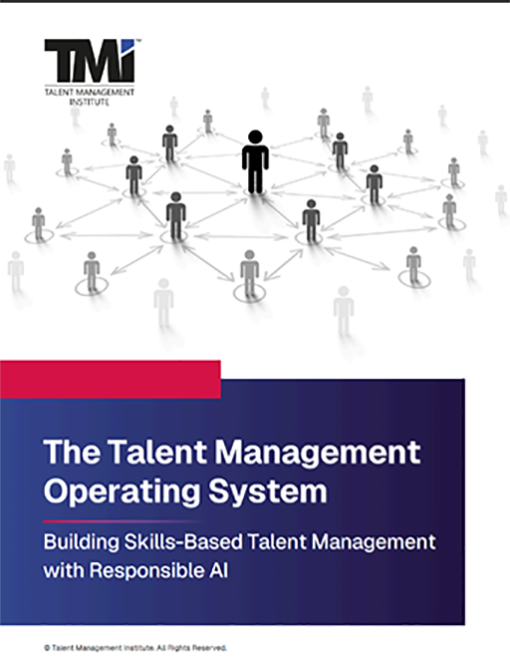
Prepare your organization for the next era of talent management with a practical framework for building a skills-first, AI-enabled workforce.
Inside the guide:

CredBadge™ is a proprietary, secure, digital badging platform that provides for seamless authentication and verification of credentials across digital media worldwide.
CredBadge™ powered credentials ensure that professionals can showcase and verify their qualifications and credentials across all digital platforms, and at any time, across the planet.

Please enter the License Number/Unique Credential Code of the certificant. Results will be displayed if the person holds an active credential from TMI.